

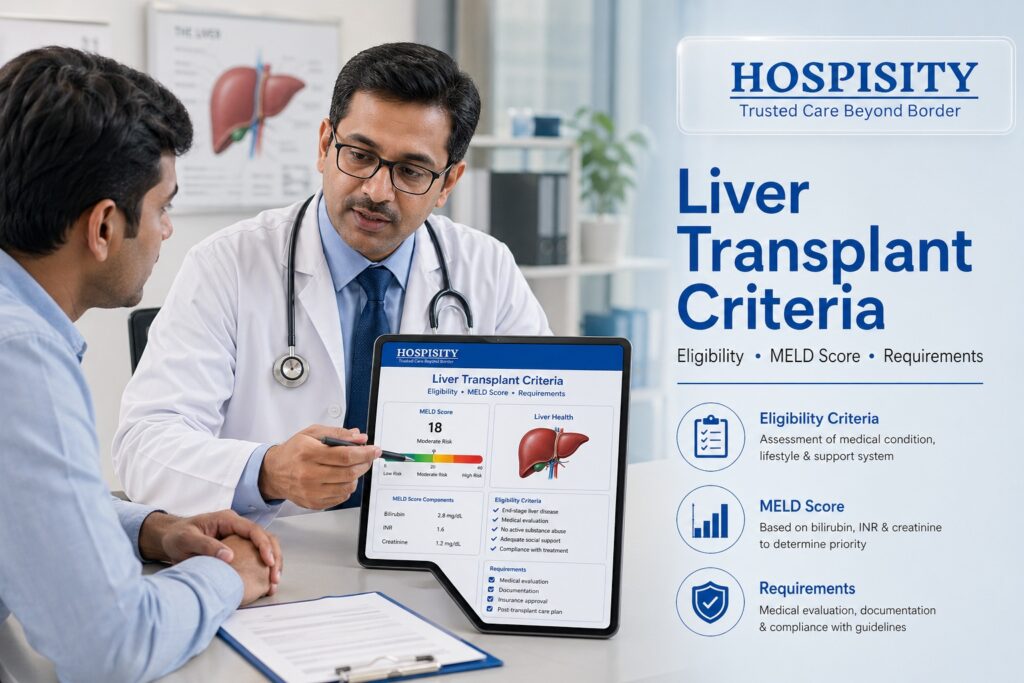
Liver Transplant Criteria
A liver transplant can be a life-saving treatment for people with severe liver disease. When the liver can no longer perform its essential functions, replacing it with a healthy donor organ becomes the only effective option.
However, not everyone with liver disease qualifies immediately. Doctors follow strict liver transplant criteria to ensure that the procedure is safe, successful, and beneficial for the patient.
If you are exploring treatment options, understanding eligibility can help you prepare better. Many patients also consider liver transplant surgery in India due to its advanced care and accessibility, making it a trusted option for international treatment.
What Is a Liver Transplant?
A liver transplant is a surgical procedure where a diseased liver is replaced with a healthy liver from a donor.
It is usually recommended when the liver is damaged beyond repair and cannot regenerate on its own.
When Is It Required?
- End-stage liver disease
- Acute liver failure
- Advanced cirrhosis
- Certain cases of liver cancer
Types of Liver Transplant
Living Donor Transplant
A healthy person donates a portion of their liver. Both the donor and recipient liver regenerate over time.
Deceased Donor Transplant
The liver is obtained from a brain-dead donor and transplanted into the patient.
Why Liver Transplant Criteria Are Important
Liver transplants are complex procedures, and donor organs are limited. Proper patient selection is essential for several reasons.
- Ensures the best use of available organs
- Improves survival and recovery outcomes
- Reduces the risk of complications
Doctors carefully evaluate each case to determine whether a patient will benefit from the transplant and can handle the surgery.
Liver Transplant Criteria: Who Qualifies?
Eligibility depends on multiple medical and non-medical factors. This section explains the key requirements in a clear and practical way.
Medical Eligibility Criteria
Patients are usually considered for transplant if they have:
- End-stage liver disease
- Chronic liver failure
- Cirrhosis due to alcohol, hepatitis, or fatty liver disease
- Acute liver failure
- Certain types of liver cancer within controlled limits
The goal is to identify patients whose liver function is severely compromised but who can still benefit from surgery.
Age and General Health Requirements
There is no strict age cutoff for liver transplant. Instead, doctors assess overall health.
- Patients must be physically fit for major surgery
- Heart and lung function should be stable
- Other chronic conditions should be controlled
Even older patients may qualify if they are otherwise healthy.
Psychological and Lifestyle Criteria
Mental and emotional readiness are important.
- Patients must be able to follow post-surgery care
- Commitment to lifelong medication is essential
- Strong family or caregiver support improves outcomes
Patients with active alcohol or substance abuse are usually required to undergo rehabilitation before being considered.
Contraindications (Who Is Not Eligible)
Some conditions may prevent a patient from qualifying for a transplant.
- Severe uncontrolled infections
- Advanced cancer outside the liver
- Serious heart or lung disease
- Active drug or alcohol abuse
- Poor compliance with medical care
These factors increase the risk of complications and may reduce the success of the transplant.
Evaluation Process Before Liver Transplant
Before approval, patients undergo a detailed evaluation process.
- Blood tests to assess liver and kidney function
- Imaging tests such as CT scans and MRI
- Cardiac and pulmonary assessments
- Infection screening
- Nutritional evaluation
Hospitals conducting liver transplant surgery in India follow strict international protocols to ensure patient safety and optimal outcomes.
This process may take several days or weeks depending on the patient’s condition.
MELD Score and Its Role in Eligibility in Liver Transplant
The MELD score for liver transplant plays a crucial role in determining priority.
What Is MELD Score?
MELD stands for Model for End-Stage Liver Disease. It is a numerical score calculated using:
- Bilirubin levels
- Creatinine levels
- INR (blood clotting ability)
Why It Matters
- Higher MELD score indicates more severe disease
- Patients with higher scores are prioritized on the waiting list
- Helps ensure fair allocation of donor organs
The MELD score is regularly updated as the patient’s condition changes.
Living Donor vs Deceased Donor Criteria in Liver Transplant
Eligibility also depends on the type of donor.
Living Donor Criteria
- Blood group compatibility
- Healthy liver function
- No major medical conditions
- Psychological readiness
Living donor transplants often reduce waiting time and allow planned surgery.
Deceased Donor Criteria
- Allocation based on MELD score
- Waiting list system
- Availability of suitable organ
While deceased donor transplants are common, waiting time can vary significantly.
Transparent Pricing for Better Healing.
We believe that great care starts with trust. That’s why we ensure complete transparency in our treatment pricing—no surprises, no hidden fees, just honest and clear costs for the care you deserve.
Can International Patients Qualify for Liver Transplant?
Yes, international patients can qualify for liver transplant, especially in countries like India.
Requirements usually include:
- Valid medical records
- Identification and legal documents
- Approved donor (if living donor transplant)
- Clearance from hospital transplant committee
Many hospitals offer dedicated international patient services to simplify the process.
Factors That Affect Approval for Liver Transplant
Several factors influence whether a patient is approved.
- Severity of liver disease
- Overall physical condition
- Availability of donor
- Hospital policies and evaluation criteria
Each case is reviewed individually to ensure the best possible outcome.
Success Rate and Outcomes of Liver Transplant
Liver transplant outcomes have improved significantly over the years.
- One-year survival rate: around 90 to 95 percent
- Five-year survival rate: around 85 to 90 percent
Patients who follow medical advice and maintain a healthy lifestyle often experience long-term success.
For detailed insights, you can explore the liver transplant survival rate and how outcomes vary based on patient factors.
Recovery After Liver Transplant
Recovery is a gradual process that requires patience and care.
- Initial hospital stay: 2 to 3 weeks
- Full recovery: 3 to 6 months
- Lifelong follow-up care
Patients need to take immunosuppressive medications to prevent rejection.
Daily habits such as proper diet, hygiene, and regular check-ups play a key role in recovery.
To understand this phase in detail, refer to the liver transplant recovery timeline and care guide for step-by-step insights.
Why Patients Choose Treatment Abroad for Liver Transplant
Many patients travel abroad for liver transplant due to several advantages.
- Lower treatment costs
- Access to experienced transplant surgeons
- Advanced medical infrastructure
- Shorter waiting times
India is one of the leading destinations, offering high-quality care with international standards.
Medical Tourism Support by Hospisity
Hospisity provides complete support for patients seeking liver transplant treatment.
Services Include
- Treatment planning and expert consultation
- Selection of top hospitals and surgeons
- Visa and travel assistance
- Accommodation arrangements
- Post-treatment follow-up
Conclusion
Understanding liver transplant criteria is the first step toward making an informed treatment decision. While the process may seem complex, it is designed to ensure the best outcomes for patients.
Eligibility depends on medical condition, overall health, and readiness for long-term care. With the right guidance and support, many patients successfully undergo transplant and regain a better quality of life.
If you are considering treatment, exploring the liver transplant surgery cost in India can help you plan your journey with clarity and confidence.
FAQs About Liver Transplant Criteria
Survival rates vary by condition and center, but most patients who pass the first year after transplant go on to have good long-term outcomes with proper care.
Yes, when performed at experienced centers with proper planning and follow-up, outcomes for international patients are comparable to domestic patients.
Initial recovery takes a few weeks, while full recovery may take several months. Most patients gradually regain strength and independence during this period.
Yes. India offers significantly lower treatment costs while maintaining high medical standards, making it a preferred destination for international patients.
Many patients live for decades after a successful liver transplant when the transplanted liver functions well and post-transplant care is followed properly. Long-term survival depends on factors such as overall health, cause of liver failure, medication adherence, and regular medical follow-up.
Age alone is not a deciding factor. Survival outcomes depend more on physiological fitness, absence of severe co-existing conditions, and overall medical stability rather than chronological age. Older patients with good general health can also have favorable outcomes.
Living donor liver transplants have shown strong outcomes when performed at experienced centers. Survival rates are comparable to, and in some cases better than, deceased donor transplants due to planned timing and shorter waiting periods.
Most international patients are advised to stay in India for approximately 6 to 8 weeks after surgery for monitoring and follow-up. Travel timelines vary depending on recovery progress and medical stability.
Potential complications include infection, rejection, bile duct issues, and medication-related side effects. Early detection and prompt management significantly reduce long-term risks and improve survival.
No, donors usually recover fully and do not require long-term medication.
Yes. Immunosuppressive medications are required lifelong to prevent organ rejection. Dosages are carefully adjusted over time to balance protection and side effects.
Certain conditions, such as hepatitis or fatty liver disease, may recur if underlying risk factors are not managed. Regular monitoring, lifestyle modifications, and medical compliance help reduce recurrence risk.
Consistent follow-up care, medication adherence, healthy diet, infection prevention, and routine testing play a critical role in long-term liver transplant success and survival.
Yes. Many hospitals in India follow international clinical protocols, maintain global accreditations, and are experienced in treating patients from the USA, UK, Middle East, and Africa with structured medical travel support.
Patients with end-stage liver disease, liver failure, or certain liver cancers may qualify.
There is no fixed cutoff, but higher scores indicate higher priority for transplant.
Yes, both donor and recipient liver portions regenerate over time.