

Liver Transplant Survival Rate
A liver transplant surgery is often considered when all other treatment options have failed and liver disease begins to threaten life itself. For patients and families, one of the most important questions is clear and understandable: What is the liver transplant survival rate, and what does life look like after surgery?
For international patients from the USA, UK, Middle East, and Africa, this question becomes even more critical when considering treatment abroad. This article explains liver transplant survival rates in simple terms, explores factors that influence outcomes, and outlines why India has become a trusted destination for liver transplant for international patients with comprehensive support from HOSPISITY.
What Is the Liver Transplant Survival Rate?
The liver transplant survival rate refers to the percentage of patients who remain alive for a specific period after undergoing liver transplant surgery. Doctors usually discuss survival in short-term and long-term milestones to give patients a realistic picture.
In general medical practice:
- Short-term survival focuses on the first 90 days to one year after transplant
- Long-term survival looks at outcomes at 5 years, 10 years, and beyond
Most patients who successfully recover from the early post-transplant period go on to live meaningful, productive lives. Survival rates have steadily improved over the years due to advances in surgical techniques, better donor selection, improved immunosuppressive medications, and structured post-transplant care.
It is important to understand that survival rates are statistical averages. Individual outcomes depend on several personal and medical factors, which are always discussed during transplant evaluation. If you want clarity on your specific condition, you can get a free expert medical opinion before making any decisions.
Liver Transplant Success Rate Explained
The liver transplant success rate goes beyond survival alone. From a medical perspective, success means the transplanted liver functions well and complications are controlled. From a patient’s perspective, success also includes quality of life, independence, and the ability to return to daily activities.
Clinically, the success rate of liver transplant is assessed by:
- Stable liver function tests
- Absence of severe rejection episodes
- Manageable medication side effects
- No major infections or surgical complications
From real-world patient experience, success often means relief from symptoms such as fatigue, jaundice, abdominal swelling, and mental confusion caused by liver failure. Most patients report gradual improvement in strength, appetite, and mental clarity within months after surgery.
For international patients, success is also linked to continuity of care. Proper follow-up, medication adherence, and regular monitoring significantly improve long-term outcomes. This is why structured medical travel planning is essential, not optional.
Factors That Affect Liver Transplant Survival Rate
The liver transplant survival rate is influenced by multiple interconnected factors. Understanding these helps patients set realistic expectations and choose the right care pathway.
Patient Health Before Transplant:
Patients in better overall health at the time of transplant generally recover faster. Conditions such as severe infections, heart disease, or advanced kidney failure can affect outcomes.
Underlying Liver Disease:
Survival varies depending on whether the transplant is performed for conditions such as cirrhosis, hepatitis-related liver failure, fatty liver disease, or acute liver failure. Early referral often improves results.
Donor Quality:
Both living donor and deceased donor liver transplants can be successful when donor evaluation is thorough and ethical protocols are followed.
Surgeon Expertise:
Liver transplant is one of the most complex surgeries. Outcomes are closely linked to the experience of the transplant surgeon and the volume of transplants performed at the center.
Hospital Infrastructure:
Advanced intensive care units, infection control systems, and multidisciplinary transplant teams play a critical role in survival.
Post-Transplant Care:
Long-term success depends on medication adherence, lifestyle adjustments, and regular follow-up. Most patients experience stable outcomes when post-transplant care is consistent.
Before choosing treatment abroad, it is advisable to request a personalised liver transplant treatment plan that accounts for these factors.
Life Before and After Liver Transplant Surgery
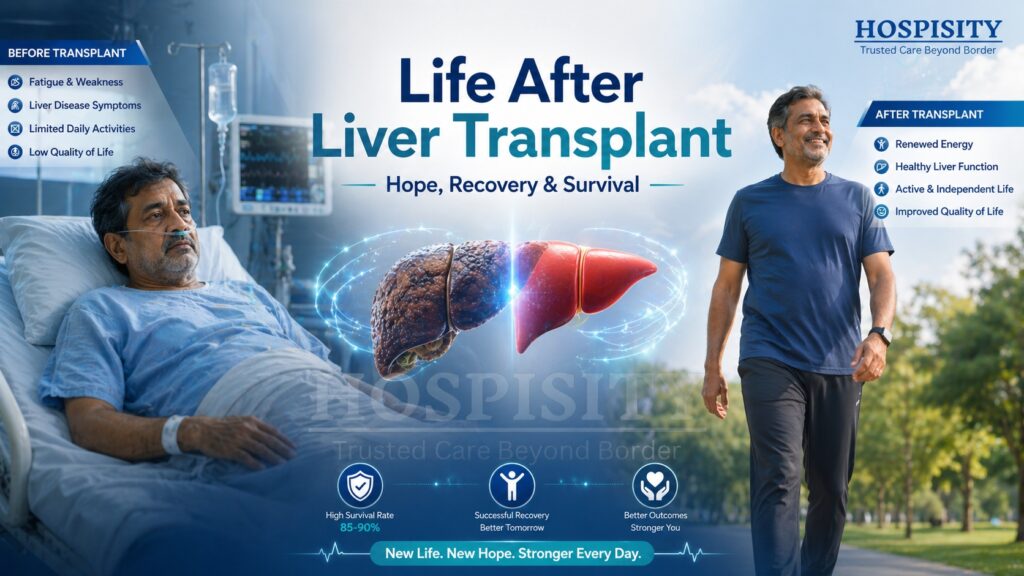
Life before liver transplant is often marked by physical decline and emotional strain. Patients commonly experience severe fatigue, fluid retention, jaundice, repeated hospitalisations, and loss of independence. Many are unable to work or travel and rely heavily on family support.
Life after liver transplant is different for most patients. Recovery is gradual, but meaningful. Patients often report improved energy levels, clearer thinking, better digestion, and the ability to resume daily routines. Over time, many return to work, travel, and social activities with appropriate medical guidance.
That said, transplantation is not a cure without responsibility. Lifelong medications, regular monitoring, and healthy lifestyle choices are essential. When managed correctly, most patients experience long-term stability and improved quality of life.
Why International Patients Choose India for Liver Transplant
India has emerged as a leading destination for liver transplants in India due to a combination of medical expertise, accessibility, and affordability.
In countries such as the USA and UK, long waiting lists for deceased donor organs can delay life-saving surgery. In parts of the Middle East and Africa, access to specialised transplant centers may be limited. These challenges lead many patients to seek timely care abroad.
India offers:
- Some of the best liver transplant hospitals in India with global accreditations
- Highly experienced transplant surgeons with international training
- Advanced surgical and ICU infrastructure
- Shorter waiting times, especially for living donor transplants
- Significantly lower costs compared to Western countries
For many families, this makes India a practical and safe option for affordable liver transplant abroad without compromising medical quality.
To explore whether this option is right for you, speak with HOSPISITY’s transplant specialists for guidance tailored to your case
Transparent Pricing for Better Healing.
We believe that great care starts with trust. That’s why we ensure complete transparency in our treatment pricing—no surprises, no hidden fees, just honest and clear costs for the care you deserve.
How HOSPISITY Supports International Liver Transplant Patients
HOSPISITY specializes in managing complex treatments such as liver transplant for international patients. The goal is to remove uncertainty and ensure patients receive ethical, transparent, and coordinated care.
HOSPISITY services include:
Top Hospital and Surgeon Selection:
Matching patients with leading transplant centers and surgeons based on medical needs and urgency.
Transparent Treatment Cost Estimates:
Clear, upfront cost planning to help families make informed decisions.
Medical Visa and Documentation Assistance:
Complete support for medical visas, invitation letters, and required approvals.
Travel and Accommodation Coordination:
Airport transfers, nearby accommodation arrangements, and local logistics.
Dedicated International Patient Coordinators:
Single-point coordinators who assist patients and families throughout treatment.
Post-Transplant Follow-Up Support:
Guidance for follow-up schedules, medication planning, and coordination with home-country doctors.
If you are considering treatment abroad, you can start your liver transplant journey in India with expert guidance and compassionate care.
Conclusion: Understanding Liver Transplant Survival and Making the Right Choice
The liver transplant survival rate has improved significantly over the years due to advances in surgical techniques, donor screening, immunosuppressive therapy, and long-term post-transplant care. For many patients with end-stage liver disease, a liver transplant is not just a life-saving procedure but an opportunity to regain health, independence, and quality of life.
While survival statistics provide helpful guidance, real outcomes depend on individual health status, timing of surgery, hospital expertise, and adherence to post-transplant care. Most patients who receive timely treatment at experienced transplant centers go on to live stable, productive lives with proper medical follow-up.
For international patients, choosing the right destination is a critical part of the decision-making process. India has become a trusted global hub for liver transplant surgery due to its experienced transplant surgeons, advanced hospital infrastructure, ethical transplant programs, and significantly lower costs compared to many Western countries. These advantages make liver transplant in India a viable and reliable option for patients from the USA, UK, Middle East, and Africa.
Equally important is having the right medical travel partner. HOSPISITY ensures that international patients receive transparent guidance, coordinated care, and continuous support, from initial medical evaluation to post-transplant follow-up. With expert hospital selection, clear cost planning, visa assistance, and dedicated patient coordinators, HOSPISITY helps patients focus on recovery rather than logistics.
If you or a loved one is considering liver transplantation, understanding survival outcomes is the first step. The next step is obtaining personalized medical guidance. You can get a free expert medical opinion, request a personalized liver transplant treatment plan, or speak with HOSPISITY’s transplant specialists to explore safe, timely, and ethical treatment options and confidently start your liver transplant journey in India.
Best Doctors for Liver Transplant Surgery in India





Best Hospitals for Liver Transplant in India




Frequently Asked Questions (FAQs)
Survival rates vary by condition and center, but most patients who pass the first year after transplant go on to have good long-term outcomes with proper care.
Yes, when performed at experienced centers with proper planning and follow-up, outcomes for international patients are comparable to domestic patients.
Initial recovery takes a few weeks, while full recovery may take several months. Most patients gradually regain strength and independence during this period.
Yes. India offers significantly lower treatment costs while maintaining high medical standards, making it a preferred destination for international patients.
Many patients live for decades after a successful liver transplant when the transplanted liver functions well and post-transplant care is followed properly. Long-term survival depends on factors such as overall health, cause of liver failure, medication adherence, and regular medical follow-up.
Age alone is not a deciding factor. Survival outcomes depend more on physiological fitness, absence of severe co-existing conditions, and overall medical stability rather than chronological age. Older patients with good general health can also have favorable outcomes.
Living donor liver transplants have shown strong outcomes when performed at experienced centers. Survival rates are comparable to, and in some cases better than, deceased donor transplants due to planned timing and shorter waiting periods.
Most international patients are advised to stay in India for approximately 6 to 8 weeks after surgery for monitoring and follow-up. Travel timelines vary depending on recovery progress and medical stability.
Potential complications include infection, rejection, bile duct issues, and medication-related side effects. Early detection and prompt management significantly reduce long-term risks and improve survival.
No, donors usually recover fully and do not require long-term medication.
Yes. Immunosuppressive medications are required lifelong to prevent organ rejection. Dosages are carefully adjusted over time to balance protection and side effects.
Certain conditions, such as hepatitis or fatty liver disease, may recur if underlying risk factors are not managed. Regular monitoring, lifestyle modifications, and medical compliance help reduce recurrence risk.
Consistent follow-up care, medication adherence, healthy diet, infection prevention, and routine testing play a critical role in long-term liver transplant success and survival.
Yes. Many hospitals in India follow international clinical protocols, maintain global accreditations, and are experienced in treating patients from the USA, UK, Middle East, and Africa with structured medical travel support.