

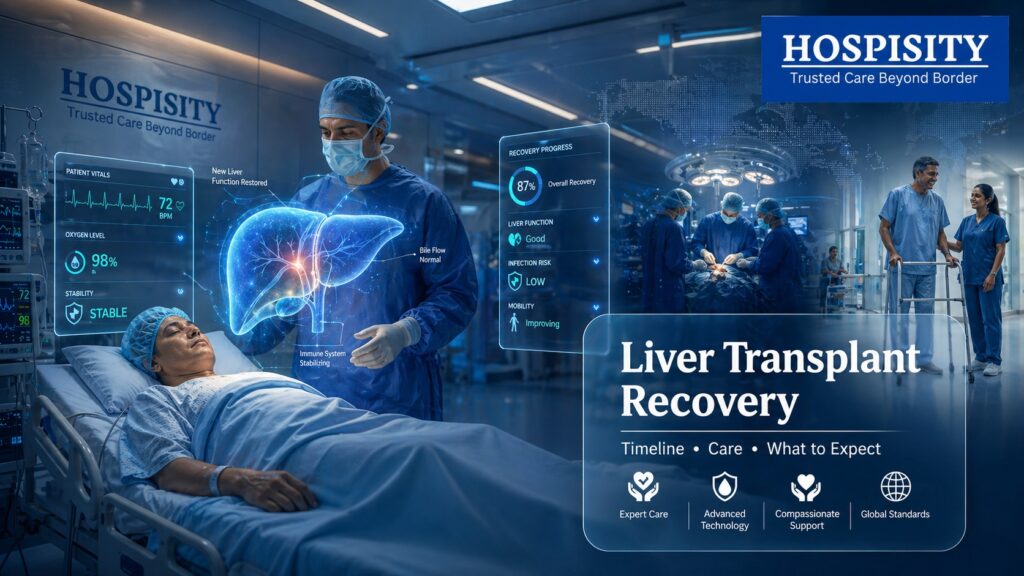
Liver Transplant Recovery Timeline and Care
Recovering from a liver transplant surgery is a journey that requires patience, medical supervision, and long-term commitment to health. For patients and families, understanding liver transplant recovery helps reduce anxiety and sets realistic expectations about healing, lifestyle changes, and long-term outcomes.
For international patients from the USA, UK, Middle East, and Africa, recovery planning becomes even more important when treatment is undertaken abroad. This guide explains the recovery timeline, physical and emotional healing, and how structured support can make liver transplant recovery safer and more predictable.
Understanding Liver Transplant Recovery
Liver transplant recovery is not an overnight process. It is gradual, highly individualised, and closely monitored by transplant specialists. Every patient heals at a different pace depending on their health before surgery, the cause of liver failure, age, and how well post-transplant care instructions are followed.
The early phase focuses on stabilising the body and ensuring the transplanted liver is functioning properly. Over time, recovery shifts toward rebuilding strength, adjusting medications, and restoring daily independence. Medical supervision remains essential throughout, as the immune system must be carefully managed to prevent rejection while avoiding infections.
Most patients gradually regain energy and confidence, but recovery requires active participation through follow-up visits, medication adherence, and lifestyle changes. If you are planning treatment abroad, it is advisable to get a free medical opinion to understand what recovery may look like in your specific case.
Liver Transplant Recovery Time: A Detailed Timeline
ICU Phase
Immediately after surgery, patients are moved to the intensive care unit. This phase typically lasts a few days and focuses on close monitoring of liver function, breathing, blood pressure, and early signs of complications. Pain is managed carefully, and most patients begin gentle movement as soon as it is safe.
Hospital Stay
After leaving the ICU, patients usually stay in the hospital for two to three weeks. During this time, doctors adjust immunosuppressive medications, manage nutrition, and begin supervised physiotherapy. Patients learn how to care for surgical wounds and understand medication schedules before discharge.
First 3 Months
The first three months are a critical period in liver transplant recovery. Regular blood tests and clinic visits help ensure the liver is functioning well and medications are balanced. Patients often experience gradual improvement in appetite, energy levels, and mobility, though fatigue is still common.
6–12 Months Recovery Period
Between six and twelve months, most patients regain significant strength and independence. Many return to work or daily routines with medical approval. Long-term habits such as a healthy diet, infection prevention, and consistent follow-up play a key role during this stage.
Patients seeking clarity on recovery expectations can request a personalised liver transplant recovery plan tailored to their health profile.
How Long Does It Take to Recover from a Liver Transplant?
A common question is how long it takes to recover from liver transplant surgery. In practical terms, recovery is measured in phases rather than weeks. Initial physical healing occurs within a few months, but full recovery may take up to a year.
Most patients are able to walk independently within weeks, manage daily activities within two to three months, and resume a stable lifestyle within six to twelve months. Emotional adjustment also takes time, as patients adapt to lifelong medications and follow-up routines.
The recovery time of liver transplant depends greatly on consistency in care. Patients who follow medical advice closely often experience smoother recovery and better long-term stability.
Life After Liver Transplant: Physical and Emotional Healing
Life after liver transplant is often described by patients as a gradual return to normalcy. Physically, most patients notice improved appetite, clearer thinking, and reduced fatigue compared to life before transplant. Muscle strength improves steadily with physiotherapy and gentle exercise.
Diet plays a vital role. Patients are advised to eat balanced, hygienically prepared meals and avoid foods that increase infection risk. Mobility improves over time, allowing patients to resume walking, travel, and light exercise.
Emotionally, recovery can include mixed feelings. Relief and gratitude are common, but anxiety about rejection or infection is also natural. Support from healthcare providers, family, and patient coordinators helps patients adjust with confidence.
Transparent Pricing for Better Healing.
We believe that great care starts with trust. That’s why we ensure complete transparency in our treatment pricing—no surprises, no hidden fees, just honest and clear costs for the care you deserve.
Why International Patients Choose India for Liver Transplant Recovery
India is a preferred destination for liver transplant recovery in India due to its strong combination of medical expertise, affordability, and accessibility. In the USA and UK, long waiting lists and high treatment costs often delay timely care. In parts of the Middle East and Africa, access to advanced transplant centers may be limited.
India offers:
- Experienced transplant teams at internationally accredited hospitals
- Advanced ICU and rehabilitation facilities
- Structured post-transplant monitoring
- Significantly lower costs compared to Western countries
These factors make India a trusted choice for liver transplant for international patients seeking quality care without prolonged waiting times. Many patients explore this option after consulting specialists through platforms like HOSPISITY.
How HOSPISITY Supports Liver Transplant Recovery for International Patients
HOSPISITY plays a critical role in ensuring continuity of care during liver transplant recovery. Managing recovery abroad requires coordination beyond surgery, and HOSPISITY provides structured, patient-focused support.
Services include:
Selection of Top Hospitals and Surgeons
Careful matching with the best liver transplant hospitals in India based on medical needs.
Transparent Cost Estimates
Clear planning for treatment and recovery-related expenses.
Medical Visa and Documentation Assistance
Support with medical visas and regulatory requirements.
Travel, Accommodation, and Local Support
Logistics planning for patients and accompanying family members.
Dedicated International Patient Coordinators
Single-point coordinators to assist throughout hospitalisation and recovery.
Post-Transplant Follow-Up Coordination
Support with follow-up schedules, rehabilitation, and communication with home-country doctors.
Patients planning recovery abroad are encouraged to speak with HOSPISITY’s transplant care team for step-by-step guidance.
Conclusion: Planning a Safe and Structured Liver Transplant Recovery
Liver transplant recovery is a carefully guided process that unfolds over months, not weeks. With proper medical supervision, most patients gradually regain strength, independence, and quality of life. Understanding the recovery timeline helps patients and families prepare both physically and emotionally for the journey ahead.
For international patients, choosing the right destination and support partner is essential. India offers advanced medical care and affordability, while HOSPISITY ensures coordinated recovery planning, transparent guidance, and continued support beyond surgery.
If you or a loved one is preparing for transplant, you can get a free medical opinion, request a personalised liver transplant recovery plan, or start your liver transplant journey in India with expert guidance from HOSPISITY.
Best Doctors for Liver Transplant Surgery in India





Best Hospitals for Liver Transplant in India




Frequently Asked Questions (FAQs)
Survival rates vary by condition and center, but most patients who pass the first year after transplant go on to have good long-term outcomes with proper care.
Yes, when performed at experienced centers with proper planning and follow-up, outcomes for international patients are comparable to domestic patients.
Initial recovery takes a few weeks, while full recovery may take several months. Most patients gradually regain strength and independence during this period.
Yes. India offers significantly lower treatment costs while maintaining high medical standards, making it a preferred destination for international patients.
Many patients live for decades after a successful liver transplant when the transplanted liver functions well and post-transplant care is followed properly. Long-term survival depends on factors such as overall health, cause of liver failure, medication adherence, and regular medical follow-up.
Age alone is not a deciding factor. Survival outcomes depend more on physiological fitness, absence of severe co-existing conditions, and overall medical stability rather than chronological age. Older patients with good general health can also have favorable outcomes.
Living donor liver transplants have shown strong outcomes when performed at experienced centers. Survival rates are comparable to, and in some cases better than, deceased donor transplants due to planned timing and shorter waiting periods.
Most international patients are advised to stay in India for approximately 6 to 8 weeks after surgery for monitoring and follow-up. Travel timelines vary depending on recovery progress and medical stability.
Potential complications include infection, rejection, bile duct issues, and medication-related side effects. Early detection and prompt management significantly reduce long-term risks and improve survival.
No, donors usually recover fully and do not require long-term medication.
Yes. Immunosuppressive medications are required lifelong to prevent organ rejection. Dosages are carefully adjusted over time to balance protection and side effects.
Certain conditions, such as hepatitis or fatty liver disease, may recur if underlying risk factors are not managed. Regular monitoring, lifestyle modifications, and medical compliance help reduce recurrence risk.
Consistent follow-up care, medication adherence, healthy diet, infection prevention, and routine testing play a critical role in long-term liver transplant success and survival.
Yes. Many hospitals in India follow international clinical protocols, maintain global accreditations, and are experienced in treating patients from the USA, UK, Middle East, and Africa with structured medical travel support.