

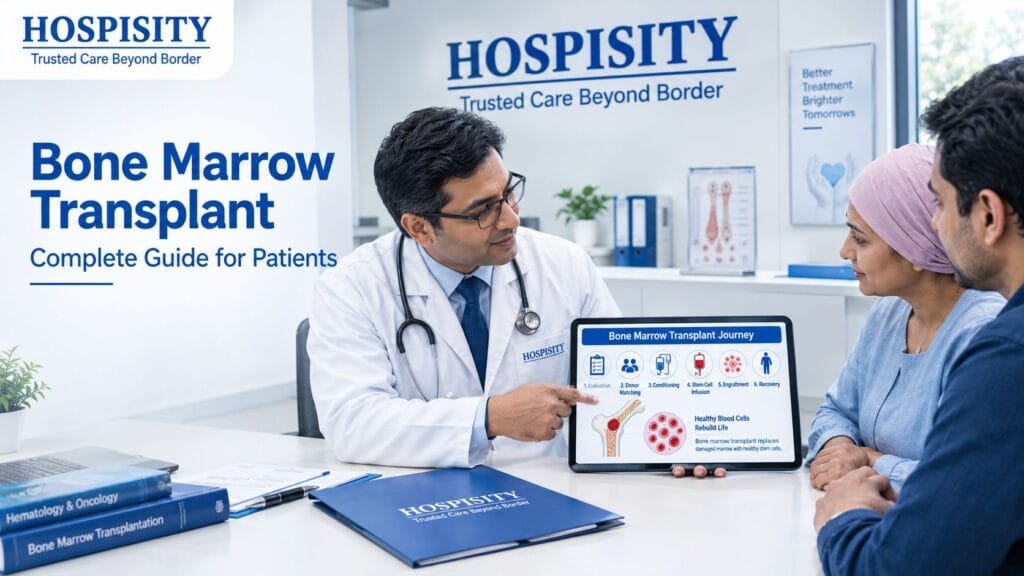
Bone Marrow Transplant: Complete Guide for Patients
A bone marrow transplant is a medical treatment that replaces damaged or diseased bone marrow with healthy stem cells. These stem cells help your body produce normal blood cells again.
Doctors recommend this treatment for serious conditions such as blood cancers and certain genetic disorders. It can offer long-term survival and, in some cases, a cure.
Understanding the full process helps patients feel more confident and prepared. Many people worry about safety, recovery, and success rates. This guide explains everything in simple terms.
Before starting treatment, doctors carefully check the Bone Marrow Transplant Eligibility Criteria to ensure the procedure is safe and suitable for each patient.
Quick Summary
- Bone marrow transplant replaces unhealthy blood-forming cells
- It is used for cancers and genetic blood disorders
- Eligibility and donor match are important factors
- Recovery takes time but improves with proper care
What is Bone Marrow Transplant?
Bone marrow transplant is a procedure where damaged bone marrow is replaced with healthy stem cells to restore normal blood cell production and immune function.
What Is Bone Marrow Transplant and How Does It Work?
Bone marrow is the soft tissue inside bones that produces blood cells. When it becomes damaged, the body cannot make healthy cells.
A bone marrow transplant introduces new stem cells into the bloodstream. These cells travel to the bone marrow and start producing healthy blood cells.
There are two main types:
Autologous Bone Marrow Transplant.
Uses the patient’s own stem cells. These are collected before treatment and given back later.
Allogeneic Bone Marrow Transplant
Uses stem cells from a donor. This requires a close donor match.
Doctors choose the type based on disease, age, and overall health.
Who Is Eligible for Bone Marrow Transplant?
Eligibility depends on several medical factors. Doctors do not recommend transplants for every patient.
Common conditions treated include:
- Leukemia
- Lymphoma
- Multiple myeloma
- Thalassemia
- Aplastic anemia
To decide who is eligible for bone marrow transplant, doctors evaluate:
- Disease stage and severity
- Response to previous treatments
- Overall health condition
- Availability of a donor match
This is often referred to as BMT eligibility, and it plays a key role in treatment success.
Why Is Donor Match Important in Bone Marrow Transplant?
For allogeneic transplants, finding the right donor is critical.
Doctors use a test called HLA typing to match the donor and patient. This reduces the risk of complications.
A good donor match improves:
- Transplant success rate
- Recovery outcomes
- Long-term survival
Types of donor match:
- Full match (usually sibling)
- Unrelated matched donor
- Half match (haploidentical, often a parent)
Even if a perfect match is not available, modern techniques allow more patients to undergo transplant safely.
Types of Bone Marrow Transplant: A Simple Comparison
Understanding the different types helps patients make informed decisions.
Autologous Transplant
- Uses patient’s own cells
- Lower risk of rejection
- Faster recovery
- Common in multiple myeloma
Allogeneic Transplant
- Uses donor cells
- Higher risk of complications
- Stronger treatment effect
- Used for leukemia and genetic diseases
Haploidentical Transplant
- Uses half-matched donor
- Expands donor options
- Increasingly common
This comparison helps doctors choose the best approach based on patient condition.
Transparent Pricing for Better Healing.
We believe that great care starts with trust. That’s why we ensure complete transparency in our treatment pricing—no surprises, no hidden fees, just honest and clear costs for the care you deserve.
How Long Does Bone Marrow Transplant Take?
Many patients ask, how long does bone marrow transplant take.
The entire process happens in stages.
- Pre-transplant evaluation: 1 to 2 weeks
- Conditioning therapy: 5 to 10 days
- Stem cell infusion: 1 day
- Initial recovery: 3 to 4 weeks
After this, recovery continues for several months.
Understanding the full process helps patients prepare better.
Bone Marrow Transplant Procedure Step by Step
The transplant process follows a structured approach.
Pre-Transplant Preparation
Doctors perform tests to confirm eligibility and prepare the patient.
Conditioning Therapy
High-dose chemotherapy or radiation destroys diseased cells.
Stem Cell Infusion
Healthy stem cells are infused into the bloodstream.
Engraftment
New cells start growing and producing blood cells. This takes about 2 to 4 weeks.
Each step is carefully monitored by doctors.
Bone Marrow Transplant Recovery: What to Expect
Recovery is gradual and requires patience.
Patients can learn more about the Bone Marrow Transplant Recovery Time to understand each phase in detail.
In general:
- First month: high infection risk
- 3 months: gradual improvement
- 6 months: better strength
- 1 year: near normal life
This phase is often called stem cell transplant recovery.
Risks and Complications of Bone Marrow Transplant
Like any major treatment, transplant carries risks.
Common risks include:
- Infections
- Bleeding
- Fatigue
- Organ complications
Graft-versus-host disease (GVHD) is a serious condition where donor cells attack the patient’s body.
Doctors monitor patients closely to manage these risks.
Long-Term Life After Bone Marrow Transplant
Most patients return to normal life after recovery.
However, some may experience changes in health over time.
It is important to understand the long term effects of bone marrow transplant to stay prepared.
These may include:
- Fatigue
- Hormonal changes
- Increased infection risk
Regular follow-up care helps manage these effects.
Bone Marrow Transplant Success Rate: What to Expect?
Success rates vary depending on several factors.
- Autologous transplant: 60 to 80 percent
- Allogeneic transplant: 50 to 70 percent
The autologous vs allogeneic transplant success rate depends on disease type, donor match, and patient health.
Better matching and early treatment improve outcomes.
Bone Marrow Transplant Cost in India: What Patients Should Know
Cost is an important factor for many patients.
In India, bone marrow transplant cost ranges from $14,000 to $38,000.
This is significantly lower than in the USA or UK.
Patients often explore Bone Marrow Transplant Cost in India because of:
- Affordable treatment
- Experienced doctors
- Advanced hospitals
The cost depends on transplant type, hospital, and complications.
Why Do Patients Choose India for Bone Marrow Transplant?
India is a leading destination for medical treatment.
Patients choose India for:
- Advanced transplant facilities
- Skilled specialists
- Short waiting time
- Affordable cost
Hospitals follow international safety standards and provide high-quality care.
How to Prepare for Bone Marrow Transplant?
Preparation plays an important role in success.
Patients should:
- Follow doctor’s instructions
- Maintain a healthy diet
- Stay mentally prepared
- Arrange caregiver support
Proper preparation helps improve recovery and reduce complications.
Conclusion
Bone marrow transplant is a complex but life-saving treatment. It offers hope for patients with serious blood disorders and cancers.
Understanding the process, risks, and recovery helps reduce fear and build confidence.
Each patient is different, and treatment depends on individual health conditions. Doctors carefully evaluate all factors before recommending transplant.
If you are considering this treatment, it is best to consult a specialist for proper evaluation and guidance. Early planning can make a big difference in outcomes.
FAQs-About Bone Marrow Transplant
Bone marrow transplant eligibility criteria include disease type, remission status, organ health, infection control, and donor availability. Doctors also assess mental readiness and overall fitness. These factors help ensure the patient can safely undergo the procedure and recover successfully.
Yes. Hospisity offers free medical opinions and cost estimates once you share your medical reports. This helps you plan your travel, budget, and treatment options with clarity.
You need a detailed medical evaluation by a transplant specialist. This includes blood tests, scans, and organ function checks. The doctor will review your disease stage, overall health, and treatment history to decide if you meet bone marrow transplant eligibility criteria.
A team of specialists decides eligibility. This team usually includes hematologists, transplant doctors, and other experts. They carefully review your medical condition, test results, and risks before confirming whether you qualify for the transplant.
There is no strict age limit. Doctors focus on biological age, which reflects overall health. Younger patients often tolerate transplant better, but older patients can also be eligible if their organs are healthy and they meet other criteria.
You can choose from private hospital rooms, nearby hotels, serviced apartments, or guest houses. Hospisity helps you book safe, affordable accommodation for you and your attendant.
You can send reports via WhatsApp, email, or secure upload. Hospisity ensures your documents reach the right specialists for evaluation within 24–48 hours.
You should bring:
- Passport & medical visa
- Previous medical records and prescriptions
- Imaging CDs/scans
- Medical summaries
- Your local doctor’s consultation notes
Hospisity will provide a checklist to make travel easier.
Yes, elderly patients can undergo transplant if they are medically fit. Reduced-intensity transplants are often used for older individuals. Doctors carefully assess risks and benefits before proceeding with treatment in older patients.
Yes, bone marrow transplant is commonly performed in children, especially for genetic disorders. Children often respond well and recover faster. Pediatric transplant specialists ensure safe and effective treatment tailored to the child’s condition.
A donor is required for allogeneic transplants. However, autologous transplants use the patient’s own stem cells, so no donor is needed. The type of transplant depends on the disease and treatment plan.
Donors are selected based on compatibility through HLA matching. Doctors look for the closest possible match to reduce complications. Siblings are often the best match, but unrelated donors can also be used.
Follow-ups are frequent in the first year and reduce over time. Doctors monitor blood counts, organ health, and immune recovery. Regular visits are important to detect and manage any long-term issues.
Patients should maintain a healthy diet, exercise regularly, and avoid infections. Hygiene and routine medical care are essential. Lifestyle changes support recovery and improve overall health.
Yes, many international patients travel for treatment. Countries like India offer advanced care and experienced doctors. Medical support services help manage travel, treatment, and recovery.
The cost typically ranges from $14,000 to $38,000. It depends on the hospital, transplant type, and complications. This is more affordable compared to many Western countries.
Success rates vary from 80 to 95 percent depending on transplant type and patient condition. A good donor match and early treatment improve outcomes significantly.
HLA matching checks compatibility between donor and patient. It is a genetic test that ensures the donor’s cells will be accepted by the patient’s body. Better matching reduces the risk of complications like rejection or GVHD.
Yes, family members can donate. Siblings have the highest chance of being a full match. Parents or children can be half-matched donors in haploidentical transplants, which are now widely used.
If no full donor is available, doctors may use a half-matched family donor or search international donor registries. Haploidentical transplants have made it possible for more patients to receive treatment even without a perfect match.
Preparation usually takes a few weeks. This includes medical tests, donor search, and planning. Doctors also prepare the patient physically and mentally for the transplant process.
Hospital stay is typically 3 to 4 weeks. During this time, patients receive treatment, stem cell infusion, and early recovery care. Close monitoring helps manage complications and ensure safe recovery.
Recovery can take several months to a year. The first few months are critical, as the immune system rebuilds. Regular follow-ups and precautions are necessary during this period.
Risks include infections, fatigue, organ complications, and graft-versus-host disease. These risks vary depending on the patient’s condition and type of transplant. Doctors monitor patients closely to manage any complications.
GVHD occurs when donor cells attack the patient’s body. It can affect skin, liver, or digestive system. It is more common in allogeneic transplants and is managed with medications and close monitoring.
Yes, in some cases, the transplant may fail. This can happen if the body rejects the new cells or if the disease returns. Proper eligibility assessment reduces this risk significantly.
Yes, many international patients travel to India for bone marrow transplant. Hospitals offer advanced care, experienced doctors, and dedicated international patient services for a smooth treatment experience.
Patients usually need to stay in India for 6 to 12 weeks. This includes treatment, hospital stay, and initial recovery. Follow-up visits may extend the duration depending on the patient’s condition.
Yes, treatment in India is 50 to 70 percent more affordable compared to the USA or UK. Despite lower costs, hospitals maintain high standards of care and advanced technology.
The cost usually includes hospital stay, doctor fees, transplant procedure, medications, and basic investigations. Some packages also include accommodation and support services for international patients.