

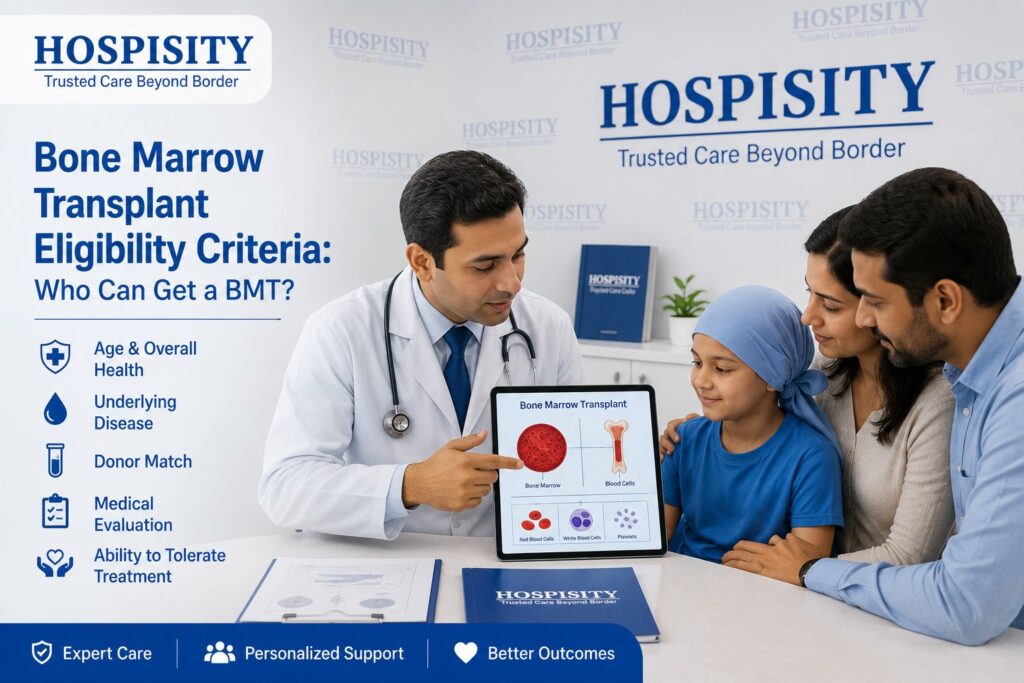
Bone Marrow Transplant Eligibility Criteria: Who Can Get a BMT?
A bone marrow transplant, also called a stem cell transplant, is a life-saving treatment for many serious blood and immune system diseases. It works by replacing damaged or unhealthy bone marrow with healthy stem cells that can produce normal blood cells again.
But not everyone can undergo this treatment right away. Doctors carefully assess each patient before recommending it. This is where understanding the bone marrow transplant eligibility criteria becomes very important.
Eligibility helps ensure that the transplant is safe, effective, and has the best chance of success. It also helps doctors avoid risks that could harm the patient.
Bone marrow transplant is commonly considered for people with blood cancers like leukemia, lymphoma, and multiple myeloma, as well as genetic disorders such as thalassemia and sickle cell disease.
If you or a loved one is exploring this option, understanding eligibility can help you take the right next step with confidence.
Quick Summary
- Bone marrow transplant replaces unhealthy blood-forming cells with healthy ones
- Not all patients qualify, eligibility depends on medical and overall health factors
- Donor matching and organ health are key requirements
- Early evaluation improves success and treatment outcomes
What Is Bone Marrow Transplant?
A bone marrow transplant is a procedure that replaces damaged bone marrow with healthy stem cells. These stem cells grow into new blood cells that function properly.
There are two main types of transplant.
Autologous transplant uses the patient’s own stem cells. These are collected, stored, and later infused back after treatment.
Allogeneic transplant uses stem cells from a donor. The donor can be a sibling, parent, or unrelated matched individual.
This treatment is used for several conditions, including:
- Leukemia
- Lymphoma
- Multiple myeloma
- Thalassemia
- Aplastic anemia
The goal is to restore the body’s ability to produce healthy blood cells.
Who Needs a Bone Marrow Transplant?
Doctors recommend a bone marrow transplant when the bone marrow stops working properly or produces abnormal cells.
This usually happens in three main situations.
Blood cancers
Diseases like leukemia and lymphoma affect how blood cells grow. A transplant helps replace these cancerous cells with healthy ones.
Bone marrow failure
Conditions such as aplastic anemia damage the bone marrow’s ability to produce blood cells.
Genetic disorders
Diseases like thalassemia or sickle cell anemia are inherited and affect blood formation.
Doctors usually consider transplant when:
- Other treatments are not effective
- Disease returns after treatment
- The condition is life-threatening
Bone Marrow Transplant Eligibility Criteria
Understanding the bone marrow transplant eligibility criteria is essential before starting treatment. Doctors evaluate several medical and personal factors to decide if a patient is suitable.
Disease Type and Stage
The type of disease plays a major role. Some cancers respond better to transplant at early stages, while others may need transplant after relapse.
For example, acute leukemia patients often undergo transplant once remission is achieved.
Remission Status
Patients with cancer are often required to be in remission before transplant. This means the disease is under control.
Better remission status improves transplant success rate.
Previous Treatment Response
Doctors check if the disease has responded to chemotherapy or other treatments. If standard treatments fail, transplant may be the next step.
Organ Health
Healthy organs are critical for handling the transplant process.
Doctors evaluate:
- Heart function
- Lung capacity
- Kidney performance
- Liver health
Poor organ function may increase risks during transplant.
Infection Status
Active infections can delay or prevent transplant. The immune system becomes very weak during the procedure, so infections must be treated first.
Donor Availability
For allogeneic transplants, a suitable donor is required. This includes:
- Matched sibling donor
- Matched unrelated donor
- Haploidentical donor (half match)
HLA Matching
HLA matching is a key part of bone marrow transplant eligibility criteria. It ensures compatibility between donor and patient.
A better match reduces complications like graft-versus-host disease.
Psychological Readiness
Transplant is physically and emotionally demanding. Patients must be mentally prepared and supported.
Doctors assess:
- Emotional stability
- Family support
- Ability to follow long-term care
Age Consideration
Age is evaluated carefully, but there is no strict limit. You can learn more about the age limit for bone marrow transplant when discussing suitability with your doctor.
Overall, bone marrow transplant eligibility criteria are designed to maximise safety and improve outcomes.
Tests Required Before Bone Marrow Transplant
Before confirming eligibility, doctors perform several tests.
These tests help assess the patient’s health and readiness.
- Blood tests to check cell counts and organ function
- HLA typing to find donor compatibility
- Imaging tests such as CT scans or X-rays
- Heart and lung function tests
- Bone marrow biopsy
These tests form a complete evaluation under the bone marrow transplant eligibility criteria.
There is no fixed age cutoff for transplant.
Doctors focus more on biological age rather than actual age. This means how healthy the body is, not just the number of years.
Younger patients usually tolerate transplant better, but many older patients successfully undergo the procedure with proper care.
Advancements in medical care have made transplant safer even for elderly individuals.
Transparent Pricing for Better Healing.
We believe that great care starts with trust. That’s why we ensure complete transparency in our treatment pricing—no surprises, no hidden fees, just honest and clear costs for the care you deserve.
Who Is Not Eligible for BMT?
Not all patients meet the bone marrow transplant eligibility criteria.
Some conditions can make transplant too risky.
These include:
- Severe heart, lung, or kidney failure
- Active, uncontrolled infection
- Advanced disease that cannot be controlled
- Poor overall health or frailty
Doctors carefully weigh risks versus benefits before making a decision.
Types of Bone Marrow Transplant and Eligibility
Different types of transplant have different eligibility requirements.
Autologous transplant
Suitable for patients whose own stem cells can be used safely, often in multiple myeloma or lymphoma.
Allogeneic transplant
Requires a donor and is used for many blood cancers and genetic disorders.
Haploidentical transplant
Uses a half-matched donor, often a family member. This expands options when a full match is not available.
Understanding the autologous vs allogeneic transplant success rate can also help patients choose the right option.
Each type is selected based on disease, patient condition, and donor availability.
Bone Marrow Transplant Procedure Step by Step
The transplant process happens in stages.
Pre-Transplant Phase
Doctors evaluate eligibility and prepare the patient. This includes tests, counseling, and planning.
Conditioning
High-dose chemotherapy or radiation is given to destroy diseased cells and suppress the immune system.
Stem Cell Infusion
Healthy stem cells are infused into the bloodstream, similar to a blood transfusion.
Engraftment
New stem cells begin to grow and produce blood cells. This usually takes 2 to 4 weeks.
Recovery After Bone Marrow Transplant
Recovery is gradual and requires close monitoring.
First 30 days
High risk of infection. Patients stay in isolation and receive intensive care.
3 to 6 months
The immune system starts rebuilding. Regular follow-ups are needed.
1 year
Most patients return to normal life, though some precautions continue.
Understanding the full bone marrow transplant recovery time helps patients plan better.
Risks and Complications
Like any major treatment, transplant carries risks.
Common complications include:
- Infection due to weak immunity
- Graft-versus-host disease (GVHD)
- Fatigue and weakness
- Organ complications
Doctors monitor patients closely to manage these risks.
Success Rate of Bone Marrow Transplant
Success rates vary depending on several factors.
On average:
- Autologous transplant: 60 to 80 percent success
- Allogeneic transplant: 50 to 70 percent success
Factors affecting outcomes include:
- Disease type and stage
- Age and overall health
- Donor match quality
- Response to previous treatment
Meeting the bone marrow transplant eligibility criteria improves the chances of success.
Long-Term Effects After Bone Marrow Transplant
Life after transplant can be normal, but some long-term effects may occur.
These include:
- Fatigue
- Hormonal changes
- Increased infection risk
- Organ function changes
Patients should stay in regular follow-up care.
Understanding the long term effects of bone marrow transplant helps patients prepare for life after treatment.
Bone Marrow Transplant Cost in India
The cost of transplant in India is significantly lower compared to Western countries.
The average cost ranges from $14,000 to $38,000, depending on the type of transplant.
- Autologous transplant: Lower cost
- Allogeneic transplant: Moderate cost
- Haploidentical transplant: Higher cost
Hospital stay is usually around 25 days.
Factors affecting cost include:
- Hospital type
- Doctor expertise
- Complications
- Donor requirements
Many patients explore options like Bone Marrow Transplant Cost in India due to affordability and quality care.
Why Patients Choose India for BMT
India has become a trusted destination for bone marrow transplant.
Reasons include:
- Affordable treatment costs
- Advanced medical technology
- Highly experienced transplant specialists
- Short waiting time
- International patient support services
Patients from across the world choose India for both quality and value.
Best Hospitals for Bone Marrow Transplant in India
Top hospitals in India offer advanced transplant facilities.
These are usually:
- Multi-specialty hospitals
- Equipped with modern transplant units
- Accredited by NABH or JCI
They follow strict safety protocols and international standards.





Best Bone Marrow Transplant Doctors in India
India has highly skilled hematologists and transplant specialists.
These experts have experience in:
- Complex transplant cases
- Pediatric and adult BMT
- Haploidentical transplants
Choosing the right doctor plays a key role in treatment success.

Dr. Nitin Sood
Senior DirectorMedical Oncology & Bone Marrow Transplant
Medanta – The Medicity, Gurugram



Dr. Jose M Easow
Director - Medical Oncology, Hematology, BMT & Cellular Therapy
Apollo Proton Cancer Centre,Chennai

Dr. Rahul Bhargava
Chief - Hemato Oncology & Bone Marrow Transplant
Fortis Memorial Research Institute,

Dr. Gaurav Dixit
Associate Director, Haemato-Oncology & Bone Marrow Transplant,
Artemis Hospital,Gurugram
Medical Tourism Support by Hospisity
Hospisity helps international patients access the right treatment easily.
Services include:
- Doctor and hospital selection
- Cost estimation
- Appointment scheduling
- Visa and travel assistance
- Accommodation support
- Post-treatment follow-up
This makes the treatment journey smooth and stress-free.
Conclusion
Bone marrow transplant is a powerful treatment that can save lives. But not everyone qualifies immediately.
Understanding the bone marrow transplant eligibility criteria is the first and most important step. It ensures that the treatment is safe and has the best chance of success.
Early consultation, proper evaluation, and the right medical team can make a big difference.
India offers a strong combination of expertise, affordability, and advanced care, making it a reliable option for patients worldwide.
FAQs About Bone Marrow Transplant Eligibility
Bone marrow transplant eligibility criteria include disease type, remission status, organ health, infection control, and donor availability. Doctors also assess mental readiness and overall fitness. These factors help ensure the patient can safely undergo the procedure and recover successfully.
Yes. Hospisity offers free medical opinions and cost estimates once you share your medical reports. This helps you plan your travel, budget, and treatment options with clarity.
You need a detailed medical evaluation by a transplant specialist. This includes blood tests, scans, and organ function checks. The doctor will review your disease stage, overall health, and treatment history to decide if you meet bone marrow transplant eligibility criteria.
A team of specialists decides eligibility. This team usually includes hematologists, transplant doctors, and other experts. They carefully review your medical condition, test results, and risks before confirming whether you qualify for the transplant.
There is no strict age limit. Doctors focus on biological age, which reflects overall health. Younger patients often tolerate transplant better, but older patients can also be eligible if their organs are healthy and they meet other criteria.
You can choose from private hospital rooms, nearby hotels, serviced apartments, or guest houses. Hospisity helps you book safe, affordable accommodation for you and your attendant.
You can send reports via WhatsApp, email, or secure upload. Hospisity ensures your documents reach the right specialists for evaluation within 24–48 hours.
You should bring:
- Passport & medical visa
- Previous medical records and prescriptions
- Imaging CDs/scans
- Medical summaries
- Your local doctor’s consultation notes
Hospisity will provide a checklist to make travel easier.
Yes, elderly patients can undergo transplant if they are medically fit. Reduced-intensity transplants are often used for older individuals. Doctors carefully assess risks and benefits before proceeding with treatment in older patients.
Yes, bone marrow transplant is commonly performed in children, especially for genetic disorders. Children often respond well and recover faster. Pediatric transplant specialists ensure safe and effective treatment tailored to the child’s condition.
A donor is required for allogeneic transplants. However, autologous transplants use the patient’s own stem cells, so no donor is needed. The type of transplant depends on the disease and treatment plan.
Donors are selected based on compatibility through HLA matching. Doctors look for the closest possible match to reduce complications. Siblings are often the best match, but unrelated donors can also be used.
Follow-ups are frequent in the first year and reduce over time. Doctors monitor blood counts, organ health, and immune recovery. Regular visits are important to detect and manage any long-term issues.
Patients should maintain a healthy diet, exercise regularly, and avoid infections. Hygiene and routine medical care are essential. Lifestyle changes support recovery and improve overall health.
Yes, many international patients travel for treatment. Countries like India offer advanced care and experienced doctors. Medical support services help manage travel, treatment, and recovery.
The cost typically ranges from $14,000 to $38,000. It depends on the hospital, transplant type, and complications. This is more affordable compared to many Western countries.
Success rates vary from 80 to 95 percent depending on transplant type and patient condition. A good donor match and early treatment improve outcomes significantly.
HLA matching checks compatibility between donor and patient. It is a genetic test that ensures the donor’s cells will be accepted by the patient’s body. Better matching reduces the risk of complications like rejection or GVHD.
Yes, family members can donate. Siblings have the highest chance of being a full match. Parents or children can be half-matched donors in haploidentical transplants, which are now widely used.
If no full donor is available, doctors may use a half-matched family donor or search international donor registries. Haploidentical transplants have made it possible for more patients to receive treatment even without a perfect match.
Preparation usually takes a few weeks. This includes medical tests, donor search, and planning. Doctors also prepare the patient physically and mentally for the transplant process.
Hospital stay is typically 3 to 4 weeks. During this time, patients receive treatment, stem cell infusion, and early recovery care. Close monitoring helps manage complications and ensure safe recovery.
Recovery can take several months to a year. The first few months are critical, as the immune system rebuilds. Regular follow-ups and precautions are necessary during this period.
Risks include infections, fatigue, organ complications, and graft-versus-host disease. These risks vary depending on the patient’s condition and type of transplant. Doctors monitor patients closely to manage any complications.
GVHD occurs when donor cells attack the patient’s body. It can affect skin, liver, or digestive system. It is more common in allogeneic transplants and is managed with medications and close monitoring.
Yes, in some cases, the transplant may fail. This can happen if the body rejects the new cells or if the disease returns. Proper eligibility assessment reduces this risk significantly.
Yes, many international patients travel to India for bone marrow transplant. Hospitals offer advanced care, experienced doctors, and dedicated international patient services for a smooth treatment experience.
Patients usually need to stay in India for 6 to 12 weeks. This includes treatment, hospital stay, and initial recovery. Follow-up visits may extend the duration depending on the patient’s condition.
Yes, treatment in India is 50 to 70 percent more affordable compared to the USA or UK. Despite lower costs, hospitals maintain high standards of care and advanced technology.
The cost usually includes hospital stay, doctor fees, transplant procedure, medications, and basic investigations. Some packages also include accommodation and support services for international patients.
Bone marrow transplant eligibility criteria include disease type, remission status, organ health, infection control, and donor availability. Doctors also assess mental readiness and overall fitness. These factors help ensure the patient can safely undergo the procedure and recover successfully.
Yes. Hospisity offers free medical opinions and cost estimates once you share your medical reports. This helps you plan your travel, budget, and treatment options with clarity.
You need a detailed medical evaluation by a transplant specialist. This includes blood tests, scans, and organ function checks. The doctor will review your disease stage, overall health, and treatment history to decide if you meet bone marrow transplant eligibility criteria.
A team of specialists decides eligibility. This team usually includes hematologists, transplant doctors, and other experts. They carefully review your medical condition, test results, and risks before confirming whether you qualify for the transplant.
There is no strict age limit. Doctors focus on biological age, which reflects overall health. Younger patients often tolerate transplant better, but older patients can also be eligible if their organs are healthy and they meet other criteria.
You can choose from private hospital rooms, nearby hotels, serviced apartments, or guest houses. Hospisity helps you book safe, affordable accommodation for you and your attendant.
You can send reports via WhatsApp, email, or secure upload. Hospisity ensures your documents reach the right specialists for evaluation within 24–48 hours.
You should bring:
- Passport & medical visa
- Previous medical records and prescriptions
- Imaging CDs/scans
- Medical summaries
- Your local doctor’s consultation notes
Hospisity will provide a checklist to make travel easier.
Yes, elderly patients can undergo transplant if they are medically fit. Reduced-intensity transplants are often used for older individuals. Doctors carefully assess risks and benefits before proceeding with treatment in older patients.
Yes, bone marrow transplant is commonly performed in children, especially for genetic disorders. Children often respond well and recover faster. Pediatric transplant specialists ensure safe and effective treatment tailored to the child’s condition.
A donor is required for allogeneic transplants. However, autologous transplants use the patient’s own stem cells, so no donor is needed. The type of transplant depends on the disease and treatment plan.
Donors are selected based on compatibility through HLA matching. Doctors look for the closest possible match to reduce complications. Siblings are often the best match, but unrelated donors can also be used.
Follow-ups are frequent in the first year and reduce over time. Doctors monitor blood counts, organ health, and immune recovery. Regular visits are important to detect and manage any long-term issues.
Patients should maintain a healthy diet, exercise regularly, and avoid infections. Hygiene and routine medical care are essential. Lifestyle changes support recovery and improve overall health.
Yes, many international patients travel for treatment. Countries like India offer advanced care and experienced doctors. Medical support services help manage travel, treatment, and recovery.
The cost typically ranges from $14,000 to $38,000. It depends on the hospital, transplant type, and complications. This is more affordable compared to many Western countries.
Success rates vary from 80 to 95 percent depending on transplant type and patient condition. A good donor match and early treatment improve outcomes significantly.
HLA matching checks compatibility between donor and patient. It is a genetic test that ensures the donor’s cells will be accepted by the patient’s body. Better matching reduces the risk of complications like rejection or GVHD.
Yes, family members can donate. Siblings have the highest chance of being a full match. Parents or children can be half-matched donors in haploidentical transplants, which are now widely used.
If no full donor is available, doctors may use a half-matched family donor or search international donor registries. Haploidentical transplants have made it possible for more patients to receive treatment even without a perfect match.
Preparation usually takes a few weeks. This includes medical tests, donor search, and planning. Doctors also prepare the patient physically and mentally for the transplant process.
Hospital stay is typically 3 to 4 weeks. During this time, patients receive treatment, stem cell infusion, and early recovery care. Close monitoring helps manage complications and ensure safe recovery.
Recovery can take several months to a year. The first few months are critical, as the immune system rebuilds. Regular follow-ups and precautions are necessary during this period.
Risks include infections, fatigue, organ complications, and graft-versus-host disease. These risks vary depending on the patient’s condition and type of transplant. Doctors monitor patients closely to manage any complications.
GVHD occurs when donor cells attack the patient’s body. It can affect skin, liver, or digestive system. It is more common in allogeneic transplants and is managed with medications and close monitoring.
Yes, in some cases, the transplant may fail. This can happen if the body rejects the new cells or if the disease returns. Proper eligibility assessment reduces this risk significantly.
Yes, many international patients travel to India for bone marrow transplant. Hospitals offer advanced care, experienced doctors, and dedicated international patient services for a smooth treatment experience.
Patients usually need to stay in India for 6 to 12 weeks. This includes treatment, hospital stay, and initial recovery. Follow-up visits may extend the duration depending on the patient’s condition.
Yes, treatment in India is 50 to 70 percent more affordable compared to the USA or UK. Despite lower costs, hospitals maintain high standards of care and advanced technology.
The cost usually includes hospital stay, doctor fees, transplant procedure, medications, and basic investigations. Some packages also include accommodation and support services for international patients.
Need Bone Marrow Transplant Treatment in India?
Get a Free Cost EstimateChat with Transplant Co-OrdinatorTop Doctors By Specialty
- Best Liver Transplant Doctors in India
- Best Cancer Doctors in India
- Best Cardiology Treatment Doctors in India
- Best Neurology Doctors in India
- Best Spine Surgery Doctors in India
- Best Orthopedic Treatment Doctors in India
- Best Urology Doctors in India
- Best ENT Doctors in India
- Best Kidney Transplant Doctors in India
- Best Bone Marrow Transplant Doctors in India
Top Hospitals By Specialty
- Best Organ Transplant Hospitals in India
- Best Cancer Hospitals in India
- Best Cardiology Treatment Hospitals in India
- Best Neurology Hospitals in India
- Best Spine Surgery Hospitals in India
- Best Orthopedic Treatment Hospitals in India
- Best Urology Hospitals in India
- Best ENT Hospitals in India
- Best Ophthalmology Hospitals in India
- Best Obesity Hospitals in India