

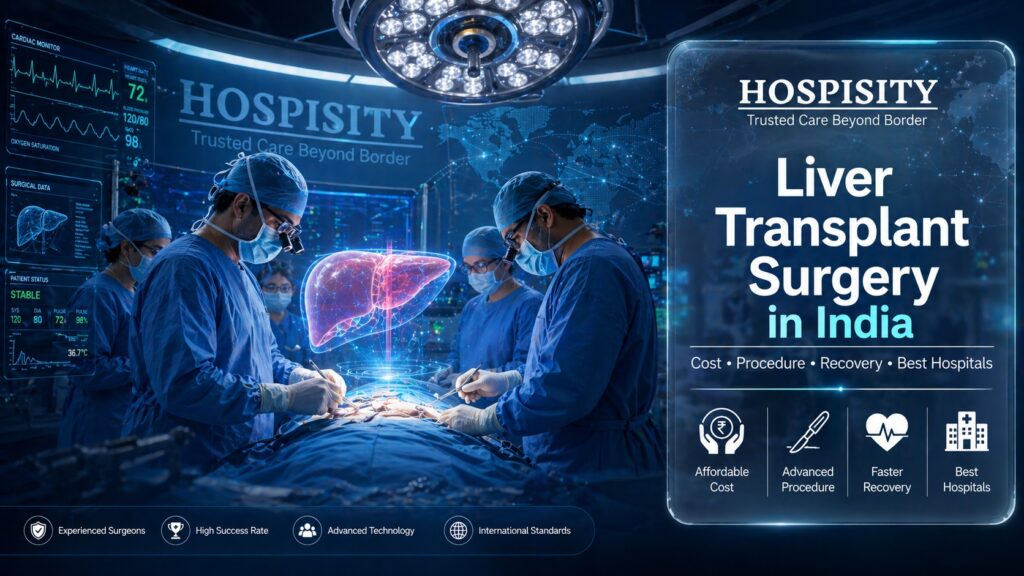
Liver Transplant Surgery in India
Liver transplant surgery is often the only life-saving option for patients with advanced liver disease. For many individuals and families, the decision to undergo a liver transplant comes after months or years of managing chronic illness, hospital visits, and declining quality of life.
Today, liver transplant surgery in India has become a trusted choice for international patients from the USA, UK, Middle East, and Africa. India offers advanced transplant expertise, experienced medical teams, and significantly more affordable care without compromising safety or clinical standards. This guide explains the procedure, costs, recovery, and how international patients can plan their treatment journey with confidence.
What Is Liver Transplant Surgery?
Liver transplant surgery involves removing a diseased or failing liver and replacing it with a healthy liver from a donor. The transplanted liver takes over essential functions such as detoxifying the blood, producing vital proteins, and regulating metabolism.
The surgery of liver transplant is complex and requires a highly skilled multidisciplinary team, including transplant surgeons, hepatologists, anesthesiologists, and intensive care specialists. When performed at experienced centers, liver transplant surgery offers patients the chance to regain health, strength, and long-term survival.
If you or a loved one has been advised to consider a transplant, you can get a free expert medical opinion to understand whether liver transplant surgery is appropriate in your case.
Who Needs Liver Transplant Surgery?
Liver transplant surgery is recommended when the liver can no longer function adequately and medical treatments are no longer effective. Common conditions that may require a liver transplant include:
- End-stage liver cirrhosis due to alcohol-related disease or fatty liver
- Chronic hepatitis B or C leading to liver failure
- Acute liver failure caused by infection or medication toxicity
- Certain types of liver cancer detected at an early stage
- Genetic or metabolic liver disorders
Symptoms often include persistent fatigue, jaundice, abdominal swelling, internal bleeding, confusion, and repeated hospital admissions. For many patients, a transplant is not about improving comfort alone, it is about survival.
Types of Liver Transplant Procedures
There are two main types of liver transplant procedures performed in India:
Living Donor Liver Transplant (LDLT):
A portion of a healthy liver is donated by a living relative or compatible donor. The liver regenerates in both donor and recipient over time. This approach allows planned surgery and reduces waiting time.
Deceased Donor Liver Transplant (DDLT):
The entire liver is transplanted from a brain-dead donor. This option depends on organ availability and waiting lists.
Both methods are widely practiced in India, with strict ethical and medical protocols to ensure donor and recipient safety.
Transparent Pricing for Better Healing.
We believe that great care starts with trust. That’s why we ensure complete transparency in our treatment pricing—no surprises, no hidden fees, just honest and clear costs for the care you deserve.
Liver Transplant Surgery in India – Step-by-Step Process
Understanding the process helps international patients prepare with clarity and confidence.
Evaluation:
Comprehensive medical tests assess liver condition, overall health, and transplant eligibility.
Donor Matching:
For living donor transplants, donor compatibility and safety evaluations are conducted. For deceased donors, patients are placed on an organ waiting list.
Surgery:
The transplant surgery typically lasts 8 to 12 hours and is performed by a specialised surgical team.
ICU Care:
After surgery, patients are closely monitored in the intensive care unit for several days.
Hospital Stay:
Most patients remain hospitalised for 2 to 3 weeks, depending on recovery progress.
With proper planning, international patients can navigate this process smoothly by requesting a personalised treatment plan before traveling.
Best Liver Transplant Doctor in India – Why Expertise Matters





Choosing the right transplant surgeon is one of the most critical decisions in liver transplant surgery. Experience matters because outcomes are closely linked to:
- Number of transplants performed
- Team-based surgical approach
- Ability to manage complex cases
- Post-operative complication management
India is home to highly experienced transplant surgeons who have trained or practiced internationally and work within structured transplant programs. Rather than focusing on titles or rankings, patients should look for proven experience and institutional support.
You can speak with HOSPISITY’s transplant specialists to identify surgeons best suited to your medical condition.
Best Liver Transplant Hospital in India – What to Look For




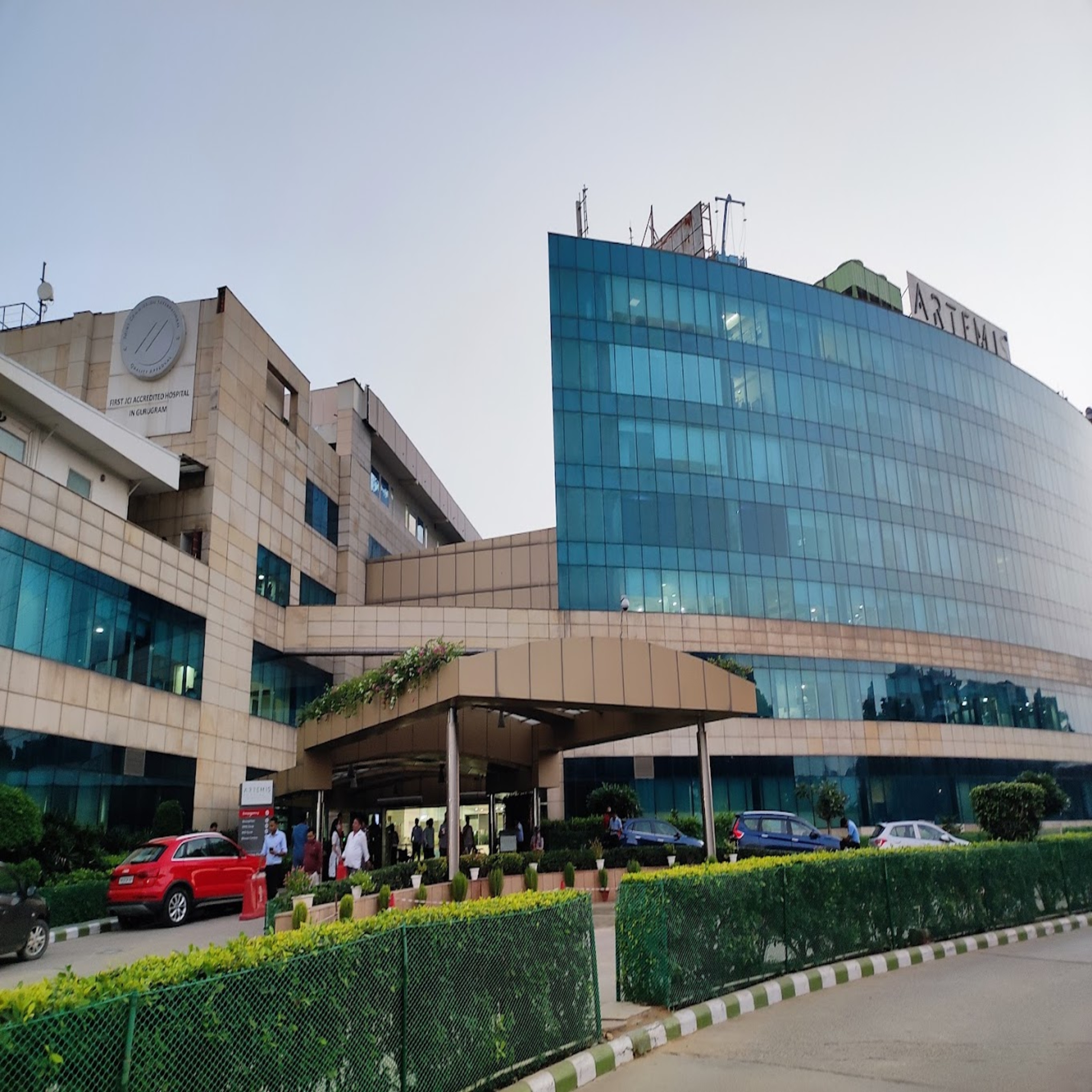
Selecting the best liver transplant hospital in India involves more than reputation alone. Important factors include:
- Advanced ICU and infection control systems
- Dedicated transplant units
- Multidisciplinary transplant teams
- International accreditations and ethical protocols
- Transparent clinical outcomes reporting
Top Indian hospitals combine modern infrastructure with high transplant volumes, which contributes to consistent outcomes for both domestic and international patients.
Liver Transplant Surgery Cost in India for International Patients
One of the main reasons international patients consider treatment abroad is affordability. The liver transplant surgery cost in India is significantly lower than in many Western countries.
Approximate Cost Range:
Liver transplant cost in India for foreigners typically ranges between USD 22,000 and USD 30,000, depending on hospital, procedure type, and medical complexity.
What’s Included:
- Surgery and hospital stay
- ICU care
- Surgeon and medical team fees
- Pre-surgical evaluation
- Immediate post-operative care
In comparison, liver transplant surgery in the USA or UK can cost several times more, often exceeding USD 300,000. This makes India a preferred destination for affordable liver transplant abroad without compromising quality.
| Type of Liver Transplant Surgery | Treatment Cost In USD |
Adult Living Donor Liver Transplant An Adult Living Donor Liver Transplant involves a family member donating part of their liver, which regenerates, while the recipient’s transplanted liver restores function, offering a life-saving solution for end-stage liver disease. | 21000 – 28000 USD |
Paediatric Living Donor Liver Transplant A Pediatric Living Donor Liver Transplant involves a family member donating a liver segment to a child with end-stage liver disease, enabling recovery as both donor and recipient livers regenerate efficiently. | 23000 – 25000 USD |
Robotic Liver Transplant A Robotic Liver Transplant uses advanced robotic technology for precise, minimally invasive surgery, resulting in smaller incisions, reduced blood loss, faster recovery, and quicker resumption of daily activities with less discomfort. | 28000 – 40000 USD |
Recovery and Life After Liver Transplant
Recovery after liver transplant surgery is gradual and carefully monitored. Most patients begin walking within days of surgery and experience steady improvement over the following months.
Key aspects of recovery include:
- Lifelong immunosuppressive medications
- Regular follow-up tests
- Balanced diet and infection prevention
- Gradual return to daily activities
Most patients report improved energy, appetite, and mental clarity compared to life before transplant. With proper care, many return to work and normal routines within months.
Liver Transplant Recovery: Timeline, Care, and What Patients Can Expect
Why International Patients Choose India for Liver Transplant Surgery
International patients from the USA and UK often face long waiting lists and high treatment costs. In parts of the Middle East and Africa, access to advanced transplant centers may be limited.
India offers a unique combination of:
- Highly experienced transplant teams
- Shorter waiting times
- Modern hospitals
- Affordable treatment costs
These factors make India a global hub for medical tourism India liver transplant services.
How HOSPISITY Supports Your Liver Transplant Journey
HOSPISITY provides end-to-end support for liver transplant for international patients, ensuring a smooth and ethical treatment experience.
Services include:
- Selection of appropriate hospitals and transplant doctors
- Transparent cost estimates and treatment planning
- Medical visa and documentation assistance
- Travel and accommodation coordination
- Dedicated patient coordinators throughout treatment
- Post-surgery follow-up and recovery support
If you are considering treatment abroad, HOSPISITY helps you focus on healing while managing the logistics.
You can start your liver transplant journey in India with guidance from experienced professionals who understand both medical care and international travel needs.
Frequently Asked Questions (FAQs)
Survival rates vary by condition and center, but most patients who pass the first year after transplant go on to have good long-term outcomes with proper care.
Yes, when performed at experienced centers with proper planning and follow-up, outcomes for international patients are comparable to domestic patients.
Initial recovery takes a few weeks, while full recovery may take several months. Most patients gradually regain strength and independence during this period.
Yes. India offers significantly lower treatment costs while maintaining high medical standards, making it a preferred destination for international patients.
Many patients live for decades after a successful liver transplant when the transplanted liver functions well and post-transplant care is followed properly. Long-term survival depends on factors such as overall health, cause of liver failure, medication adherence, and regular medical follow-up.
Age alone is not a deciding factor. Survival outcomes depend more on physiological fitness, absence of severe co-existing conditions, and overall medical stability rather than chronological age. Older patients with good general health can also have favorable outcomes.
Living donor liver transplants have shown strong outcomes when performed at experienced centers. Survival rates are comparable to, and in some cases better than, deceased donor transplants due to planned timing and shorter waiting periods.
Most international patients are advised to stay in India for approximately 6 to 8 weeks after surgery for monitoring and follow-up. Travel timelines vary depending on recovery progress and medical stability.
Potential complications include infection, rejection, bile duct issues, and medication-related side effects. Early detection and prompt management significantly reduce long-term risks and improve survival.
No, donors usually recover fully and do not require long-term medication.
Yes. Immunosuppressive medications are required lifelong to prevent organ rejection. Dosages are carefully adjusted over time to balance protection and side effects.
Certain conditions, such as hepatitis or fatty liver disease, may recur if underlying risk factors are not managed. Regular monitoring, lifestyle modifications, and medical compliance help reduce recurrence risk.
Consistent follow-up care, medication adherence, healthy diet, infection prevention, and routine testing play a critical role in long-term liver transplant success and survival.
Yes. Many hospitals in India follow international clinical protocols, maintain global accreditations, and are experienced in treating patients from the USA, UK, Middle East, and Africa with structured medical travel support.