

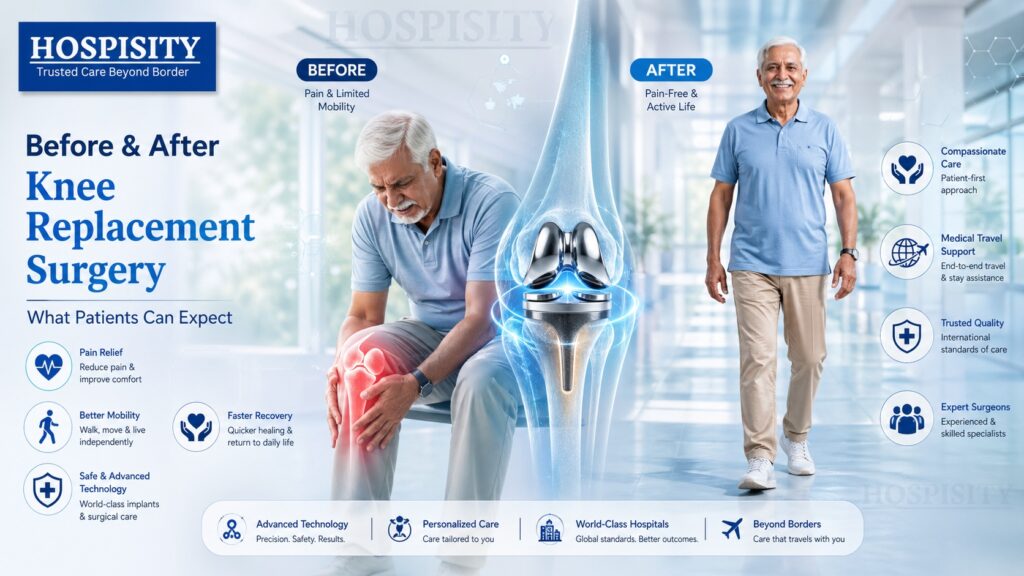
Before and After Knee Replacement Surgery
Knee replacement surgery is often a life-changing decision for patients who have lived with chronic knee pain, stiffness, and mobility limitations for years. For many international patients from the USA, UK, Middle East, and Africa, understanding what life looks like before and after knee replacement surgery is a critical part of preparing for treatment abroad.
This guide is written from a patient-care perspective, reflecting real clinical journeys and recovery experiences. It explains the physical, emotional, and lifestyle changes patients typically experience, while also outlining how international patients can safely and affordably undergo knee replacement surgery in India with structured medical travel support.
Understanding Life Before Knee Replacement Surgery
Before knee replacement surgery, patients often live with persistent knee pain that affects nearly every aspect of daily life. Osteoarthritis is the most common cause, gradually wearing down the cartilage that cushions the knee joint. Over time, this leads to bone-on-bone friction, swelling, stiffness, and deformity.
Many patients report difficulty with simple activities such as walking short distances, climbing stairs, sitting down, or standing for long periods. Sleep is frequently disrupted due to pain, and reliance on pain medications or injections becomes routine. Mobility aids such as knee braces or walking sticks may offer temporary relief but r arely restore independence.
Beyond physical symptoms, the emotional impact is significant. Loss of mobility often leads to reduced social participation, frustration, anxiety, and a sense of dependence on family members. For international patients, long waiting times or high treatment costs in their home countries can further add to stress and uncertainty.
If you are experiencing progressive pain despite medication, physiotherapy, or injections, it may be time to get a free medical opinion to understand whether knee replacement is the right option for you.
Who Needs Knee Replacement Surgery?
Knee replacement surgery is typically recommended when non-surgical treatments no longer provide relief and quality of life is significantly affected. Medical indications include advanced osteoarthritis, rheumatoid arthritis, post-traumatic arthritis, or severe joint damage due to injury.
Patients who benefit most often experience:
- Persistent knee pain during rest and movement
- Severe stiffness limiting knee bending or straightening
- Reduced ability to walk, climb stairs, or perform daily tasks
- Structural knee deformity or instability
- Poor response to medications, injections, or physical therapy
Age alone is not the deciding factor. Surgeons focus on pain severity, functional limitation, and overall health. Many international patients choose surgery when knee pain begins to interfere with work, travel, or personal independence.
A personalised evaluation helps determine whether total or partial knee replacement is appropriate. You can request a personalised treatment plan based on your medical reports before making any travel decisions.
Knee Replacement Surgery Procedure in India
Knee replacement surgery in India follows globally accepted clinical protocols and is performed at internationally accredited hospitals. The procedure involves removing damaged cartilage and bone surfaces and replacing them with precision-engineered implants made of metal alloys and medical-grade polyethylene.
Most hospitals use advanced technologies such as computer-assisted navigation, minimally invasive surgical techniques, and high-quality prostheses from globally trusted manufacturers. Indian orthopedic surgeons are highly experienced, many having trained or practiced in the USA, UK, or Europe.
The surgery typically lasts one to two hours, followed by early mobilisation within 24 hours. Pain management protocols, infection control standards, and rehabilitation pathways are aligned with international best practices.
For international patients, coordinated care is essential. HOSPISITY ensures seamless access to leading hospitals and surgeons while maintaining transparency and safety at every step.
Recovery After Knee Replacement Surgery
Recovery after knee replacement surgery is a gradual but structured process. Most patients begin standing and walking with support within one day of surgery. Hospital stays usually last three to five days, depending on individual recovery and travel plans.
The knee replacement recovery timeline generally includes:
- Week 1–2: Reduced surgical pain, assisted walking, basic physiotherapy
- Week 3–6: Improved knee bending, independent walking indoors, reduced swelling
- Week 6–12: Increased strength, outdoor walking, return to light daily activities
- 3–6 Months: Significant improvement in mobility, minimal pain, improved endurance
Patients often report steady pain reduction and improved sleep within weeks. Long-term outcomes include better joint stability, increased walking distance, and the ability to resume low-impact activities such as swimming or cycling.
International patients benefit from guided rehabilitation plans and follow-up support, which are critical for optimal results.
Transparent Pricing for Better Healing.
We believe that great care starts with trust. That’s why we ensure complete transparency in our treatment pricing—no surprises, no hidden fees, just honest and clear costs for the care you deserve.
Before vs After Knee Replacement Surgery – A Patient Comparison
The contrast between life before and after knee replacement surgery is often substantial.
Before Surgery:
Patients experience chronic pain, stiffness, limited mobility, and dependency on pain medications. Daily activities require effort, and quality of life is compromised.
After Surgery:
Most patients report significant pain relief, improved knee movement, and restored independence. Walking becomes easier, posture improves, and confidence returns. Many international patients note they can travel, socialise, and participate in daily routines without constant discomfort.
While outcomes vary based on health status and rehabilitation commitment, knee replacement surgery consistently aims to restore function and dignity to daily living.
Why International Patients Choose India for Knee Replacement Surgery
India has become a preferred destination for affordable knee replacement abroad due to its combination of clinical excellence and cost efficiency. Treatment costs in India are significantly lower than in the USA, UK, or many Middle Eastern countries, without compromising quality.
Key reasons international patients choose knee replacement surgery in India include:
- Access to globally accredited hospitals
- Highly experienced orthopedic surgeons
- Advanced surgical technology and implants
- Shorter waiting times
- Comprehensive medical travel support
Patients from the USA, UK, Middle East, and Africa trust India for consistent outcomes, transparent pricing, and personalised care pathways.
If you are exploring options, speak with HOSPISITY’s medical experts to understand how treatment in India compares to your home country.
How HOSPISITY Supports International Knee Replacement Patients
HOSPISITY is a dedicated medical tourism company specialising in knee replacement surgery for international patients. Our role is to simplify the entire treatment journey, allowing patients to focus on recovery rather than logistics.
HOSPISITY services include:
- Careful hospital and surgeon selection based on patient needs
- Clear cost estimates and treatment planning before travel
- Medical visa documentation and assistance
- Travel, airport transfers, and accommodation coordination
- Dedicated patient coordinators throughout the stay
- Post-surgery follow-up and rehabilitation guidance
Patients often appreciate having a single point of contact who understands both medical care and international travel requirements. If you are considering treatment abroad, start your knee replacement journey in India with expert guidance and compassionate support.
Conclusion: Making an Informed Decision About Knee Replacement Surgery
Understanding the journey before and after knee replacement surgery helps patients make confident, well-informed decisions about their health. While life before surgery is often defined by chronic pain, limited mobility, and reduced independence, life after knee replacement is commonly marked by improved movement, reduced discomfort, and a renewed ability to engage in daily activities.
For international patients, choosing the right destination, hospital, and surgeon is just as important as the surgery itself. Knee replacement surgery in India offers a balance of advanced medical care, experienced orthopedic surgeons, and affordability, making it a trusted option for patients from the USA, UK, Middle East, and Africa.
With structured planning, proper rehabilitation, and expert guidance, knee replacement can significantly enhance quality of life. HOSPISITY ensures that international patients receive ethical, transparent, and personalised support at every stage, from the first medical opinion to long-term follow-up, so the focus remains on recovery and well-being.
If knee pain is limiting your life, now may be the right time to explore safe and effective treatment options abroad. You can speak with HOSPISITY’s medical experts to understand whether knee replacement surgery in India is suitable for you and what outcomes you can realistically expect.
Relevant Blogs of Knee Replacement Surgery
Best Doctors for Knee Replacement Surgery in India





Dr. P Suryanarayan
Sr. VP Medical, Joint Director & Senior Consultant – Orthopaedics
SIMS Hospital, Chennai
Best Hospitals For Hip Replacement Surgery





Frequently Asked Questions (FAQs)
The knee replacement recovery timeline varies by patient, but most individuals begin walking with support within 24 hours of surgery. Significant improvement is typically seen within 6 to 8 weeks, while full recovery may take 3 to 6 months with consistent physiotherapy and follow-up care.
Pain is managed with medications and physiotherapy. Most patients report significant pain relief after recovery.
Patients usually start walking with support within 1–2 days.
International patients should plan to stay for 3–4 weeks.
Yes, India has globally accredited hospitals and experienced surgeons.
Yes, medical visas for India are streamlined for treatment purposes.
Yes, many top hospitals offer robotic-assisted knee replacement.
Partial replaces one compartment; total replaces the entire knee joint.
Coverage depends on your insurance provider and policy terms.
Most patients can fly safely after 3–4 weeks with doctor approval.
Yes, India is considered very safe for knee replacement surgery for international patients. Leading hospitals follow strict infection control protocols, international safety guidelines, and standardised surgical practices.
Yes, many top hospitals in India strictly follow international healthcare standards. Several hospitals are accredited by NABH and JCI, which are globally recognised for quality and patient safety. These hospitals use advanced surgical technologies, high-quality implants from global manufacturers.
Yes. HOSPISITY provides complete medical tourism support, including airport pickup, local transportation, and comfortable accommodation near the hospital. Arrangements are made according to the patient’s budget and medical condition, ensuring a smooth, stress-free experience from arrival in India until discharge and recovery.
International patients traveling to India for knee replacement surgery typically need:
- Valid passport
- Medical visa (M-Visa)
- Invitation letter from the Indian hospital
- Medical treatment recommendation or appointment confirmation
- Recent medical reports
HOSPISITY assists patients at every step of the medical visa application process, ensuring accurate documentation and faster approvals.
Yes, post-surgery physiotherapy is readily available and highly advanced in India. Most hospitals offer in-house rehabilitation services, while HOSPISITY also arranges continued physiotherapy support during the patient’s stay and after returning home through virtual follow-ups.
You may consider surgery if knee pain persists despite medication, injections, or physiotherapy, and if daily activities, mobility, or sleep are significantly affected. A specialist evaluation is essential to determine the right timing.
To understand your options, you can get a free medical opinion or request a personalised treatment plan through HOSPISITY