

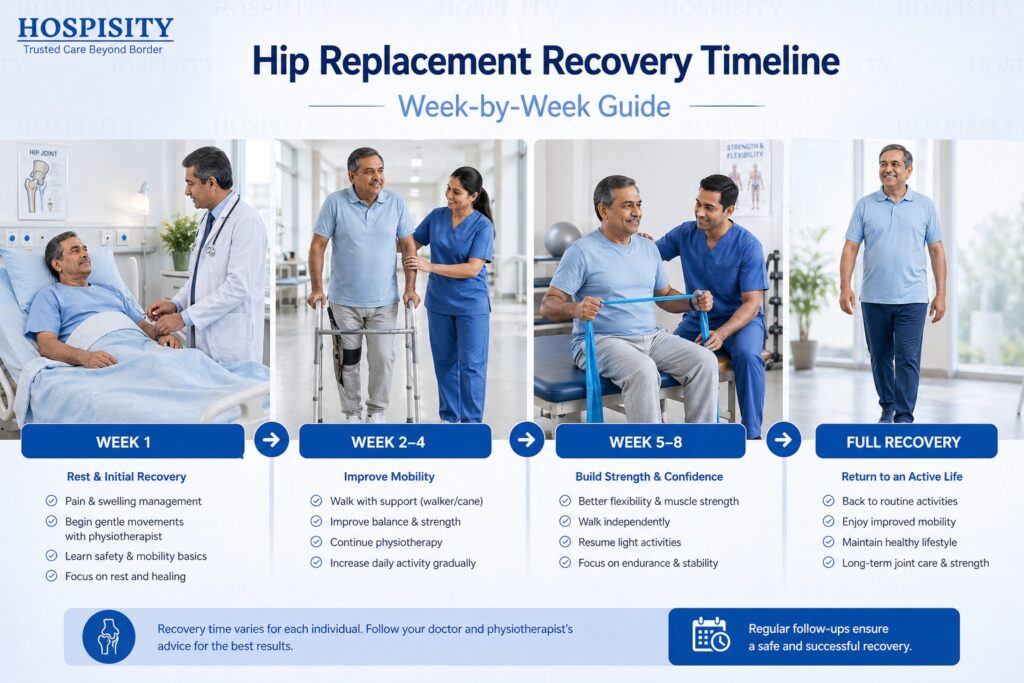
Hip Replacement Recovery Timeline
Recovering from hip replacement surgery is just as important as the procedure itself. Many patients focus on the surgery but feel uncertain about what comes after. Questions about walking, pain, and returning to normal life are very common.
The truth is, every patient heals differently. Some people regain mobility quickly, while others need more time and structured rehabilitation. Understanding the hip replacement recovery timeline helps set realistic expectations and reduces anxiety.
If you are planning treatment or researching options, knowing what recovery looks like can help you prepare both physically and mentally.
What Is Hip Replacement Surgery?
Hip replacement surgery is a procedure where a damaged hip joint is replaced with an artificial implant. This implant is designed to restore smooth movement and reduce pain.
There are two main types:
- Total hip replacement where both the ball and socket are replaced
- Partial hip replacement where only the damaged portion is replaced
The goal is simple. Reduce chronic pain and help patients move freely again.
Why Recovery Timeline Matters
Recovery is not a single event. It is a gradual process that happens in stages.
Each stage has its own goals, from pain control in the first week to regaining full strength over several months. Knowing what to expect helps patients stay motivated and avoid unnecessary stress.
Physiotherapy plays a major role during recovery. It helps rebuild muscle strength, improve flexibility, and prevent complications.
A clear timeline also helps patients understand that healing takes time. Progress may feel slow at first, but consistent effort leads to steady improvement.
Hip Replacement Recovery Timeline: Week-by-Week
Let us break down the hip replacement recovery timeline in a practical, easy-to-understand way.
Week 1: Immediate Post-Surgery Phase
The first week is focused on stabilisation and early movement.
Patients usually stay in the hospital for 3 to 5 days. During this time:
- Pain is managed with medication
- Doctors monitor vital signs and wound healing
- Physiotherapists help patients sit, stand, and take a few steps
Walking after hip surgery often begins within 24 to 48 hours using a walker or support.
Simple movements like bending slightly or shifting positions are encouraged to improve blood circulation.
Weeks 2–4: Early Recovery Phase
This phase is about building confidence and improving mobility.
Most patients are discharged and continue recovery at home or in a rehabilitation center.
During this stage:
- Walking becomes more frequent with support
- Physiotherapy exercises increase gradually
- Pain and swelling start to reduce
- Patients begin performing basic daily activities
Walking after hip surgery becomes smoother, though support like a walker or cane is still needed.
Weeks 4–6: Strength Building Phase
At this point, recovery becomes more noticeable.
Patients often experience:
- Improved muscle strength
- Better balance and coordination
- Reduced dependence on walking aids
Exercises focus on strengthening the hip and surrounding muscles. Many patients begin walking short distances without support, depending on their progress.
Independence starts to return during this phase.
Weeks 6–12: Functional Recovery Phase
This is a key milestone in the hip replacement recovery timeline.
Patients can:
- Perform most daily activities independently
- Walk longer distances comfortably
- Improve posture and balance
Physiotherapy continues, but exercises become more functional and less restrictive.
Some patients may start light activities like climbing stairs or driving with medical approval.
3–6 Months: Advanced Recovery Phase
Recovery continues steadily, and mobility improves significantly.
By this time:
- Walking becomes more natural
- Flexibility improves
- Muscle strength continues to build
Many patients return to work, especially if their job is not physically demanding.
Regular exercise remains important to maintain joint stability and prevent stiffness.
6–12 Months: Full Recovery
This is the final stage of recovery.
Most patients achieve:
- Full strength and mobility
- Minimal or no pain
- Confidence in daily activities
By the end of one year, the artificial joint feels more natural, and patients can enjoy an active lifestyle again.
Factors That Affect Hip Replacement Recovery Time
Not everyone follows the exact same recovery timeline. Several factors influence how quickly a person heals.
- Age: Younger patients often recover faster
- Overall health: Chronic conditions can slow healing
- Type of surgery: Robotic or minimally invasive surgery may allow quicker recovery
- Physiotherapy consistency: Regular exercise speeds up progress
- Lifestyle habits: Diet, smoking, and activity levels all matter
Understanding these factors helps set realistic expectations.
Tips for Faster Hip Replacement Recovery
While recovery takes time, certain habits can support faster healing.
- Follow your physiotherapy plan carefully
- Maintain a healthy, balanced diet
- Stay active but avoid overexertion
- Keep the surgical area clean to prevent infection
- Avoid sudden or risky movements
Consistency is more important than intensity. Small daily improvements add up over time.
Transparent Pricing for Better Healing.
We believe that great care starts with trust. That’s why we ensure complete transparency in our treatment pricing—no surprises, no hidden fees, just honest and clear costs for the care you deserve.
What to Expect After Hip Replacement
Life after hip replacement is often much better than before surgery.
Patients usually experience:
- Significant pain relief
- Improved mobility
- Better sleep and overall comfort
Daily tasks like walking, sitting, and climbing stairs become easier.
However, some adjustments are needed. Patients must avoid high-impact activities and follow medical advice to protect the implant.
Risks and Complications During Recovery
Although most patients recover well, it is important to be aware of possible complications.
- Infection at the surgical site
- Blood clots in the legs
- Joint stiffness
- Implant dislocation or wear
These risks are relatively low when surgery is performed by experienced surgeons and proper care is followed.
Early detection and prompt treatment help manage most complications effectively.
When Can You Walk, Drive, and Work?
Many international patients travel for hip replacement surgery due to several advantages.
- Affordable treatment costs
- Access to experienced surgeons
- Advanced hospitals with modern technology
- Short waiting times
For those considering treatment options, exploring hip replacement surgery in India can provide access to high-quality care at a fraction of the cost compared to Western countries.
Medical Tourism Support by Hospisity
Hospisity helps patients plan their entire treatment journey smoothly.
Services Include
- Personalised treatment planning
- Selection of top hospitals and surgeons
- Visa and travel assistance
- Accommodation arrangements
- Post-treatment follow-up care
Conclusion
The hip replacement recovery timeline is a gradual journey that requires patience, consistency, and proper guidance. While the first few weeks may feel challenging, steady progress leads to long-term success.
With the right care and support, most patients regain mobility, reduce pain, and return to a normal lifestyle. Understanding each phase of recovery helps set realistic expectations and improves confidence.
If you are planning surgery, it is also important to understand the financial aspect. You can explore options related to hip replacement surgery cost in India to make an informed decision.
FAQs About Hip Replacement Recovery
Modern implants can last 15–25 years or more with proper care.
Yes. Hospisity offers free medical opinions and cost estimates once you share your medical reports. This helps you plan your travel, budget, and treatment options with clarity.
Pain is well managed with medications, and most patients feel significant relief after surgery.
Robotic surgery offers higher precision but may not be necessary for every patient.
You can choose from private hospital rooms, nearby hotels, serviced apartments, or guest houses. Hospisity helps you book safe, affordable accommodation for you and your attendant.
No. Payments are usually made after arrival at the hospital, except in cases where advance admission or special preparation is required. Hospisity will guide you transparently.
You can send reports via WhatsApp, email, or secure upload. Hospisity ensures your documents reach the right specialists for evaluation within 24–48 hours.
You should bring:
- Passport & medical visa
- Previous medical records and prescriptions
- Imaging CDs/scans
- Medical summaries
- Your local doctor’s consultation notes
Hospisity will provide a checklist to make travel easier.
Yes, India welcomes international patients with complete medical travel support via Hospisity.
Initial recovery takes about 6 to 12 weeks, while full recovery may take up to one year.
Most patients walk comfortably without support within 6 to 8 weeks.
Medical Disclaimer
This content is for informational purposes only and should not be considered medical advice. Always consult a qualified orthopedic specialist for diagnosis and treatment.