

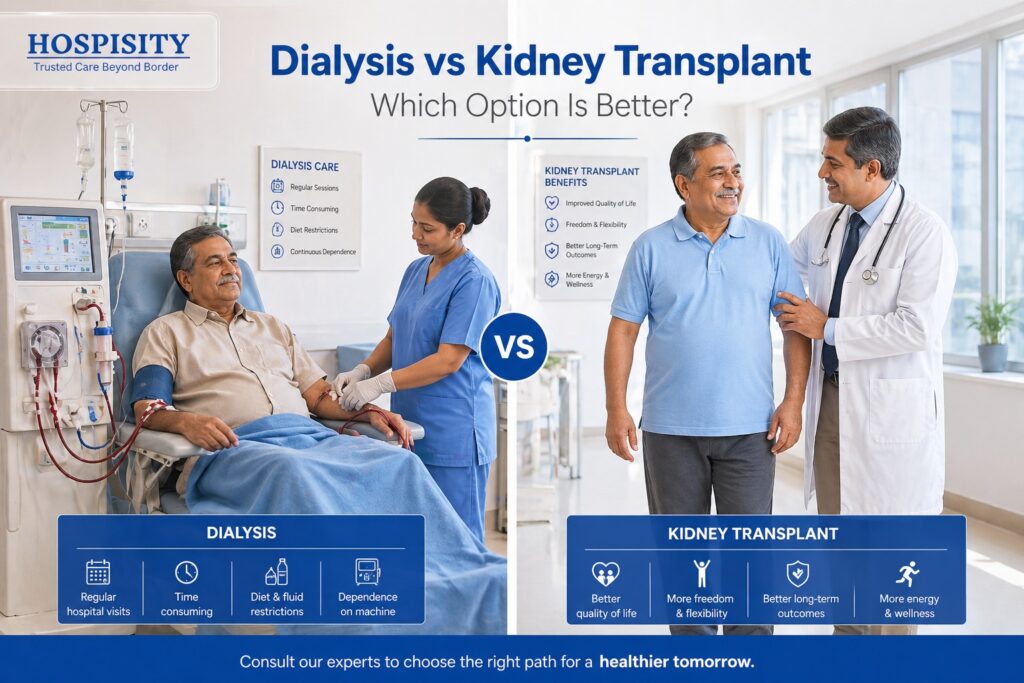
Dialysis vs Kidney Transplant: Which Is Better for Kidney Failure?
Kidney failure is a life-changing condition. When the kidneys stop working properly, the body can no longer remove waste and excess fluid effectively. This leads to serious health complications that require immediate treatment.
At this stage, patients are often faced with a difficult choice: dialysis or a transplant. Many people feel confused about which option is better, safer, or more suitable for long-term health.
This guide explains dialysis vs kidney transplant in a clear and practical way. It will help you understand the differences, benefits, risks, and what each option means for your daily life.
What Happens in Kidney Failure?
The kidneys play a crucial role in keeping the body balanced. They filter waste, regulate electrolytes, control blood pressure, and help produce red blood cells.
When kidney function drops below a critical level, it is called end-stage renal disease or ESRD. At this point, the kidneys can no longer support normal body functions.
Common symptoms include:
- Persistent fatigue
- Swelling in legs and face
- Shortness of breath
- Nausea and loss of appetite
- Reduced urine output
Without treatment, kidney failure can be life-threatening. That is why dialysis or a transplant becomes necessary.
What Is Dialysis?
Dialysis is a treatment that performs some of the functions of the kidneys by removing waste and excess fluid from the blood.
There are two main types:
Hemodialysis
Blood is filtered through a machine outside the body. This is usually done in a hospital or dialysis center, about three times a week.
Peritoneal Dialysis
A fluid is introduced into the abdomen to absorb waste, which is then drained. This can often be done at home.
Dialysis helps patients survive, but it does not fully replace kidney function. It requires ongoing sessions, strict schedules, and lifestyle adjustments.
What Is Kidney Transplant?
A kidney transplant involves replacing a failed kidney with a healthy one from a donor. The donor may be a living person or a deceased individual.
Unlike dialysis, a transplant offers a more permanent solution. It restores kidney function more naturally and allows patients to live a more independent life.
If you want to understand the complete medical process, you can explore this detailed guide on kidney transplant surgery.
After a successful transplant, patients still need lifelong medications to prevent organ rejection, but overall quality of life improves significantly.
Dialysis vs Kidney Transplant: Key Differences
Factor | Dialysis | Kidney Transplant |
Function | Partial replacement of kidney function | Near-normal kidney function |
Lifestyle | Restricted and time-consuming | More flexible and independent |
Frequency | Regular sessions for life | One-time surgery with follow-up |
Cost | Ongoing expenses | One-time cost plus medication |
Survival | Lower long-term survival | Higher survival rates |
This comparison highlights why many patients prefer transplant when medically eligible.
Transparent Pricing for Better Healing.
We believe that great care starts with trust. That’s why we ensure complete transparency in our treatment pricing—no surprises, no hidden fees, just honest and clear costs for the care you deserve.
Lifestyle Comparison: Dialysis vs Transplant
Treatment choice affects daily life more than most people expect.
Daily Routine
Dialysis requires strict scheduling, often several hours multiple times a week. A transplant allows more freedom.
Travel
Dialysis patients must plan travel around treatment centers. Transplant patients can travel more easily after recovery.
Work Life
Maintaining a job can be difficult with dialysis schedules. After transplant, many patients return to full-time work.
Energy Levels
Dialysis often leaves patients feeling tired. Transplant patients usually regain energy and stamina over time.
Cost Comparison: Dialysis vs Kidney Transplant
Cost is an important factor, especially for long-term care.
Dialysis involves recurring expenses that continue for life. These include treatment sessions, medications, and hospital visits.
In contrast, a transplant has a higher upfront cost but lower long-term expenses. Patients mainly need follow-up care and medications after surgery.
If you are considering treatment abroad, understanding the kidney transplant surgery cost in India can help you evaluate affordability. India offers high-quality treatment at a significantly lower cost compared to Western countries.
Survival Rate & Long-Term Outcomes
When comparing kidney transplant vs dialysis survival rate, transplant clearly offers better outcomes for most patients.
- Dialysis patients have a lower long-term survival rate
- Transplant patients often live longer with better health
A successful transplant not only extends life expectancy but also improves quality of life. Patients experience fewer complications and better physical functioning.
However, results depend on factors such as age, overall health, and post-treatment care.
Who Is Eligible for Kidney Transplant?
Not all patients can immediately undergo a transplant. Eligibility depends on several factors.
- Overall health condition
- Absence of severe infections or cancer
- Ability to tolerate surgery
- Availability of a suitable donor
Doctors perform detailed evaluations before approving a transplant. If you want to understand the steps involved, you can read more about the kidney transplant procedure and how patients are prepared for surgery.
Risks of Dialysis vs Kidney Transplant
Both treatments carry risks, but they differ in nature.
Dialysis Risks
- Infection at access site
- Low blood pressure during sessions
- Muscle cramps and fatigue
- Long-term cardiovascular strain
Transplant Risks
- Organ rejection
- Surgical complications
- Infection due to immunosuppressive drugs
- Medication side effects
While transplant has surgical risks, dialysis carries ongoing long-term health challenges.
Dialysis vs Kidney Transplant: Which Is Better?
There is no one-size-fits-all answer. The best option depends on the patient’s condition, medical history, and personal circumstances.
For many eligible patients, a kidney transplant is considered the better option because:
- It offers improved quality of life
- It reduces dependence on frequent treatments
- It provides better long-term survival
However, dialysis remains a vital option for patients who are not candidates for transplant or are waiting for a donor.
A doctor’s guidance is essential in making the right decision.
Why Patients Choose Kidney Transplant in India
India has become a leading destination for kidney transplant treatment.
Patients choose India because of:
- Affordable treatment costs
- Experienced transplant surgeons
- Advanced hospital infrastructure
- Shorter waiting times
International patients also benefit from comprehensive support services that make the treatment journey smoother.
Medical Tourism Support
For patients traveling abroad, having the right support system is crucial.
Hospisity provides end-to-end assistance, including:
- Treatment planning and cost estimates
- Selection of top hospitals and specialists
- Visa and travel coordination
- Accommodation arrangements
- Post-treatment follow-up
Get Started
Conclusion
Choosing between dialysis vs kidney transplant is a major decision that affects both health and lifestyle. While dialysis can sustain life, a transplant often provides a more complete and long-term solution.
Understanding the differences in cost, survival, and daily impact can help patients make informed choices. With proper medical evaluation and guidance, many patients can successfully transition from dialysis to transplant and enjoy a better quality of life.
If you are exploring treatment options, learning about the kidney transplant surgery cost in India can help you plan your next steps with confidence.
Yes, kidney transplant offers better quality of life and long-term survival compared to dialysis.
Yes. Hospisity offers free medical opinions and cost estimates once you share your medical reports. This helps you plan your travel, budget, and treatment options with clarity.
With proper care, a transplanted kidney can function for 10–20 years or more.
Yes, it is safe and offers faster recovery in suitable patients.
No, donors usually recover fully and do not require lifelong medication.
You can choose from private hospital rooms, nearby hotels, serviced apartments, or guest houses. Hospisity helps you book safe, affordable accommodation for you and your attendant.
You can send reports via WhatsApp, email, or secure upload. Hospisity ensures your documents reach the right specialists for evaluation within 24–48 hours.
You should bring:
- Passport & medical visa
- Previous medical records and prescriptions
- Imaging CDs/scans
- Medical summaries
- Your local doctor’s consultation notes
Hospisity will provide a checklist to make travel easier.
Yes, provided a living related donor accompanies the patient.
It ranges between $10,500 and $15,500 depending on the procedure and hospital.
The surgery typically takes 3 to 4 hours.
Yes, it offers better quality of life and long-term survival.
It usually takes 3 to 5 hours depending on the patient’s condition.
Like any surgery, there are risks, but success rates are high with proper care.
Most patients can start walking within a few days after surgery.
Most patients return to a normal lifestyle with improved energy and fewer restrictions.
Medical Disclaimer
This article is for informational purposes only and does not replace professional medical advice. Always consult a qualified healthcare provider for diagnosis and treatment decisions.
Top Doctors By Specialty
- Best Liver Transplant Doctors in India
- Best Cancer Doctors in India
- Best Cardiology Treatment Doctors in India
- Best Neurology Doctors in India
- Best Spine Surgery Doctors in India
- Best Orthopedic Treatment Doctors in India
- Best Urology Doctors in India
- Best ENT Doctors in India
- Best Kidney Transplant Doctors in India
- Best Bone Marrow Transplant Doctors in India
Top Hospitals By Specialty
- Best Organ Transplant Hospitals in India
- Best Cancer Hospitals in India
- Best Cardiology Treatment Hospitals in India
- Best Neurology Hospitals in India
- Best Spine Surgery Hospitals in India
- Best Orthopedic Treatment Hospitals in India
- Best Urology Hospitals in India
- Best ENT Hospitals in India
- Best Ophthalmology Hospitals in India
- Best Obesity Hospitals in India